
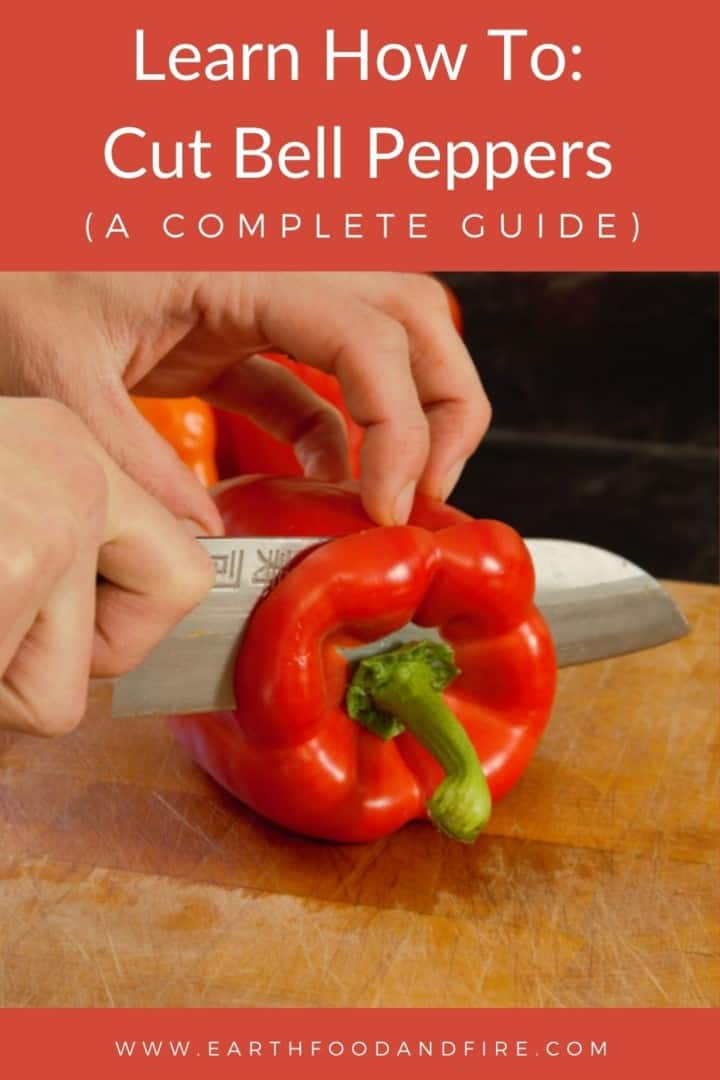
Learn how to cut bell peppers easily and efficiently with our simple step-by-step guide! We'll show you four easy ways to cut bell peppers, giving you several options depending on the recipe, personal preference, and your cooking style.
Learning how to cut bell peppers properly is a great opportunity to practice your knife skills and become a faster, more efficient cook in the kitchen, making the most of your precious fresh produce with minimal waste.
This post may contain affiliate links for which we may be compensated if a purchase is made through the links provided at no extra cost to you. For more information, please read our affiliate disclosure.
Jump to:
How To Select Bell Peppers
Before we get to chopping bell peppers, I quickly want to go over how to select the best bell peppers and dispel a common myth about these versatile vegetables.
In the kitchen, quality ingredients not only affect the flavor of food but also its appearance. As such, being able to properly pick and choose good quality produce is a good skill to have.
Regardless of whether you purchase your peppers or pick them from your garden, you want to select peppers that are:
- firm and feel heavy in the hand
- smooth, with as few blemishes or soft spots as possible
- fully matured with a vibrant, fully developed color
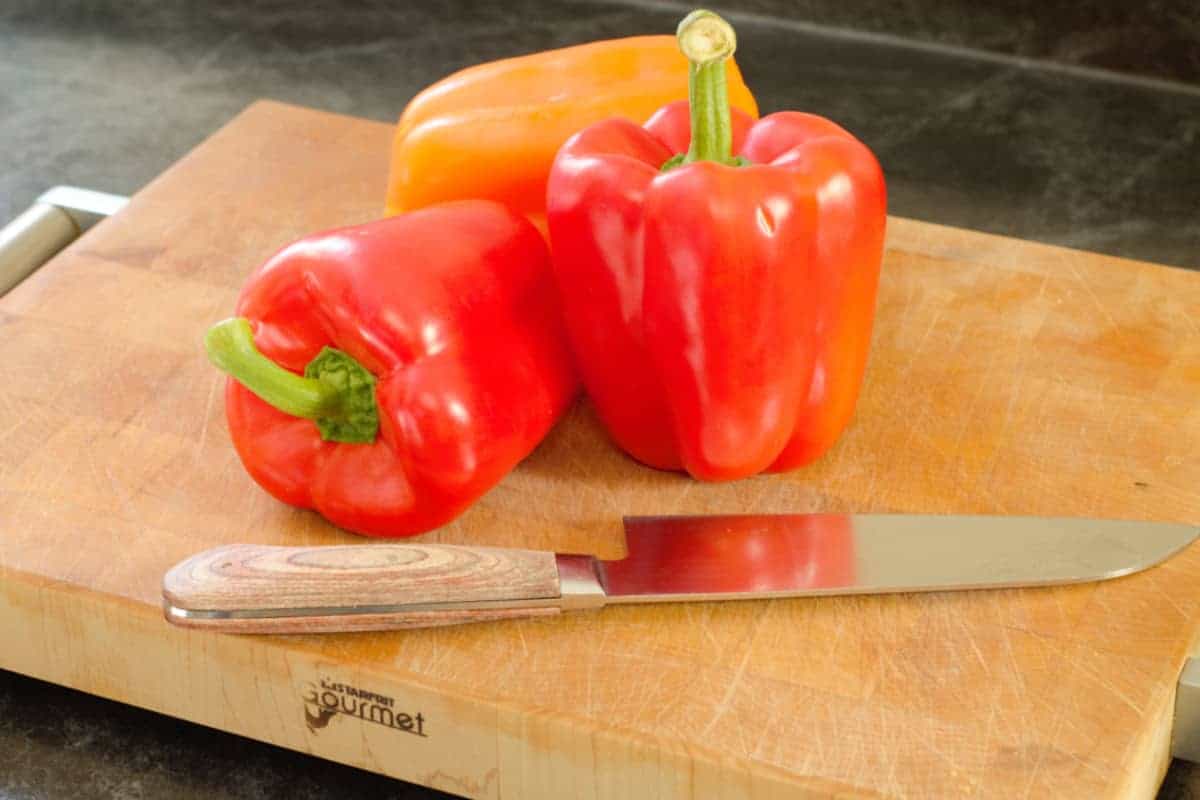
Peppers that have soft spots, wrinkles, or other imperfections can indicate the pepper is old and starting to decompose, was mishandled during transport, or is infected with some kind of mold or other disease (especially if mold or other black spots are visible).
Now, despite what some social media posts may have you believe, choosing peppers based on the number of 'bumps' in the hopes of choosing male or female peppers is a myth and not actually a thing.
There is no such thing as male or female peppers, and characteristics such as sweetness or the number of bumps on the bottom are due to the variety and growing conditions of the individual pepper plant.
How To Cut Bell Peppers 4 Different Ways
Well then, let's get to the real purpose of this article, shall we!? There are generally four different ways you can cut bell peppers. Which kind you choose will depend on what you plan on doing with the pepper, as well as personal preference.
Are you julienning the pepper for a fancy stir-fry? Slicing rings for a salad? Stuffing the pepper with other ingredients? Or maybe just dicing the pepper as part of a more complex recipe?
Most often, the individual recipe will indicate which cut to use, but if the specific terminology has you confused, don't worry, we'll clear it up!
How To Julienne Bell Peppers
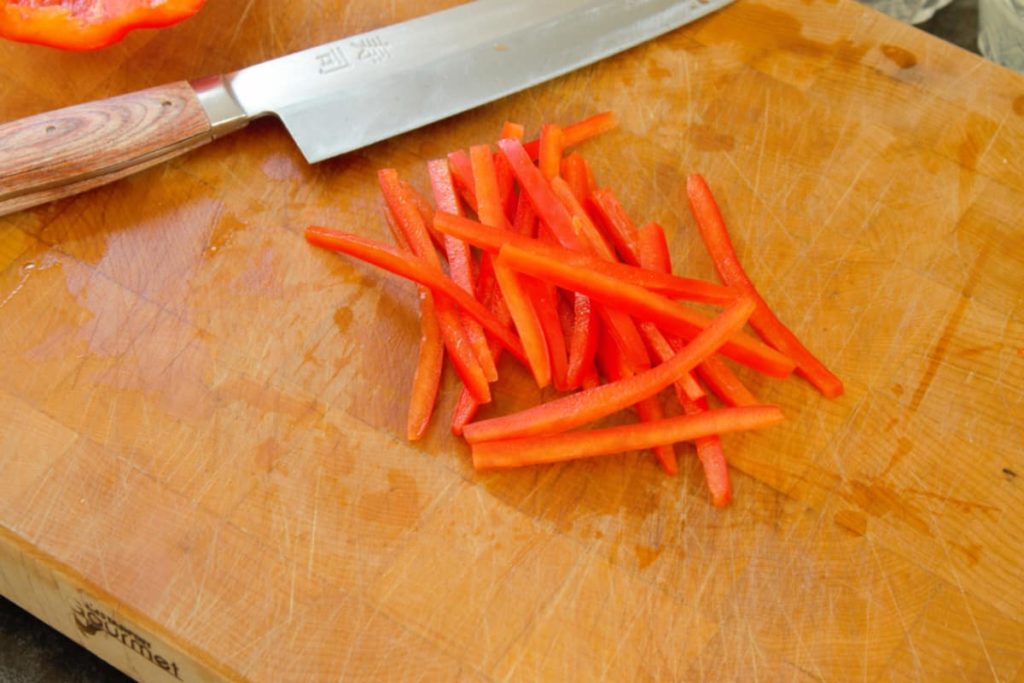
The first way how to cut bell peppers is to julienne them. This means cutting thin slices, perfect for stir-fries and similar recipes.
You are aiming for a roughly ¼ inch (or 5 mm) wide cut, about 2 inches (or 5cm) long. (Well, unless you are preparing some fancy decoration where all the pieces need to be exactly the same, the length is the length of your pepper).
Begin by laying the pepper flat on its side. Remove the top (stem end) of the bell pepper, as well as the bottom.
Remove the stem if it is still attached to the removed top portion, and discard it. Set the removed top and bottom of the pepper aside.
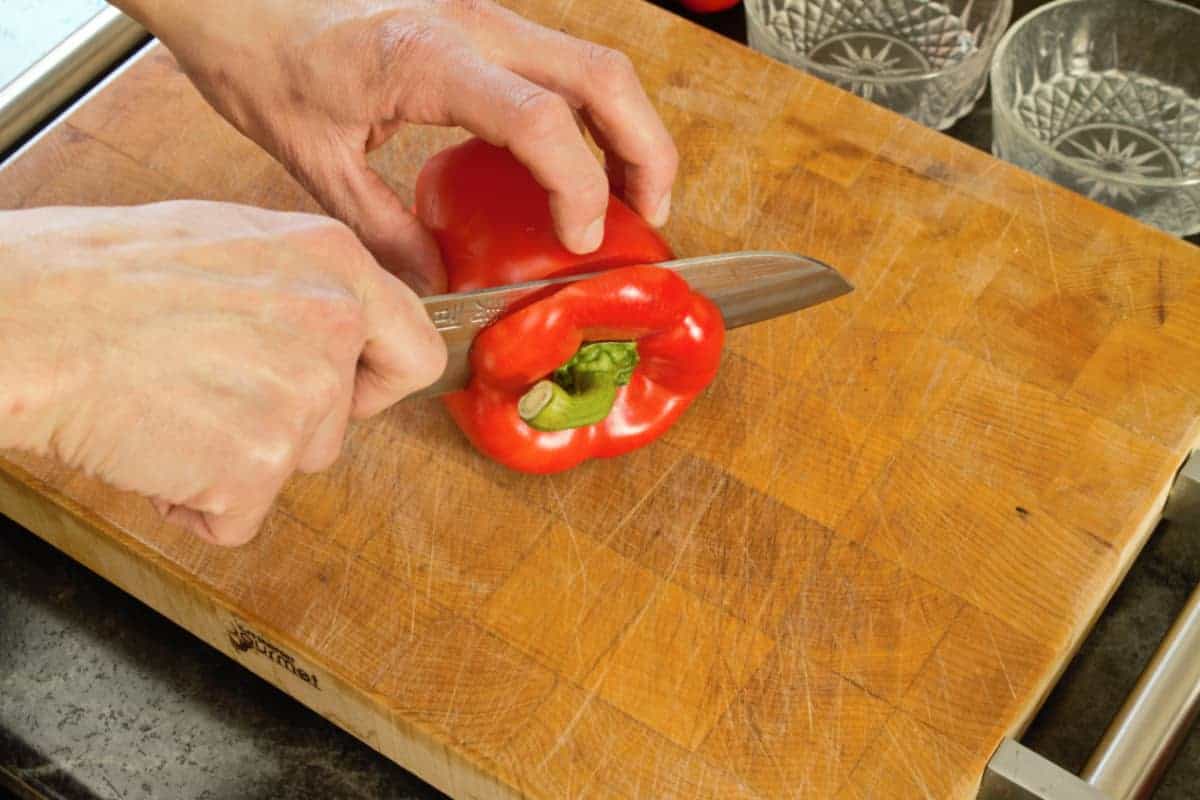
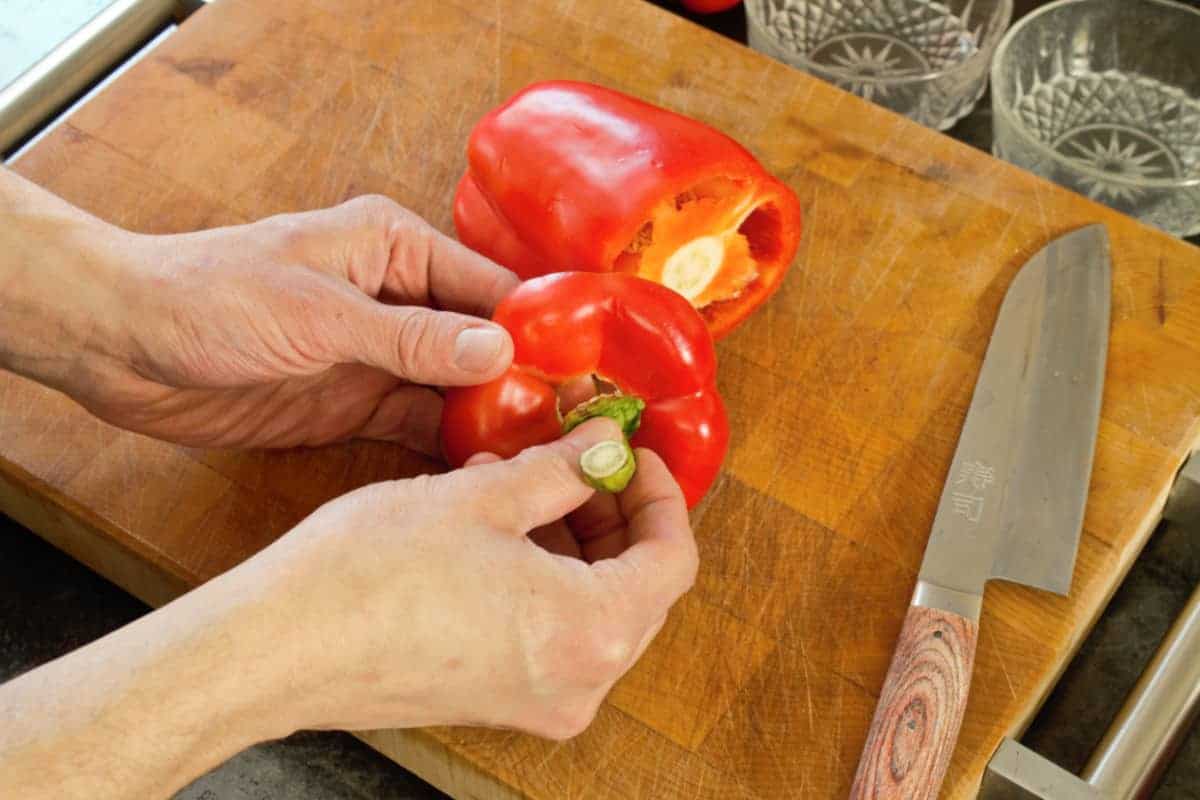
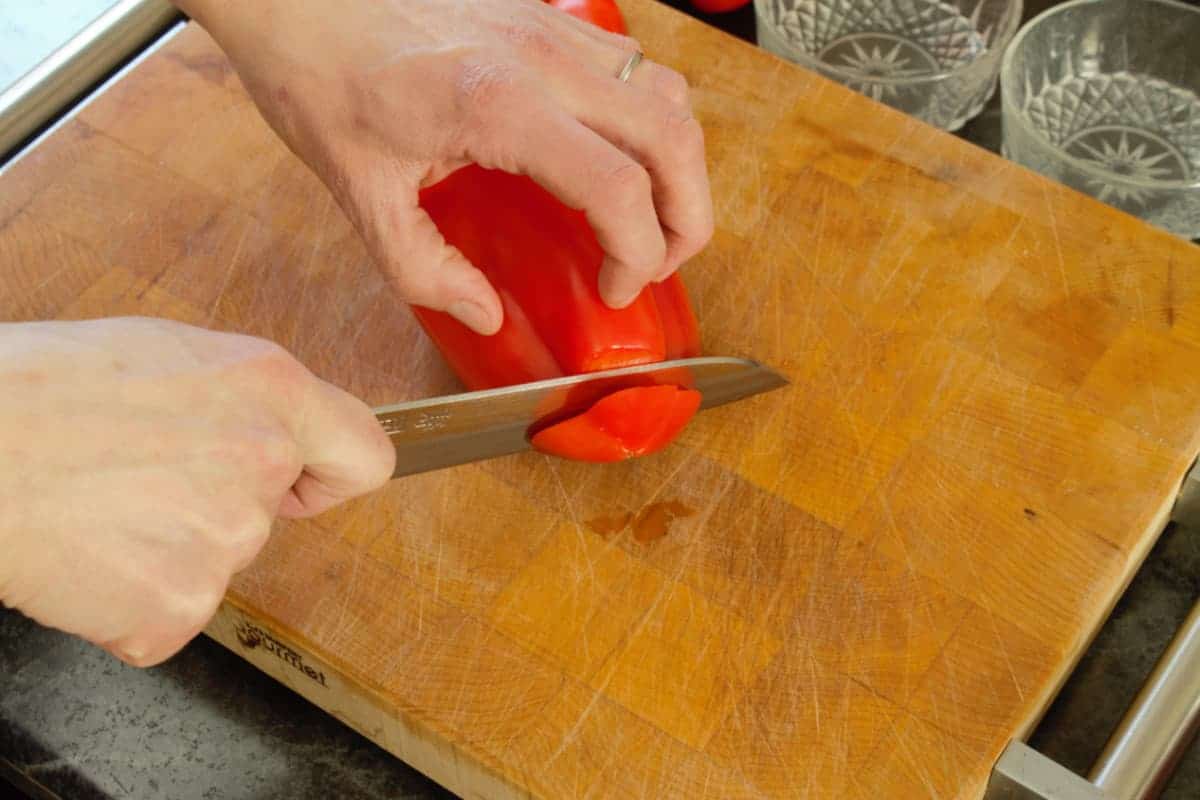
Stand the pepper up on its bottom cut side, then slice down through one side of the bell pepper. Lay the pepper flat on its side again and, beginning at the last cut you made, slide your knife along the inside of the pepper, releasing the core from the walls as you go.
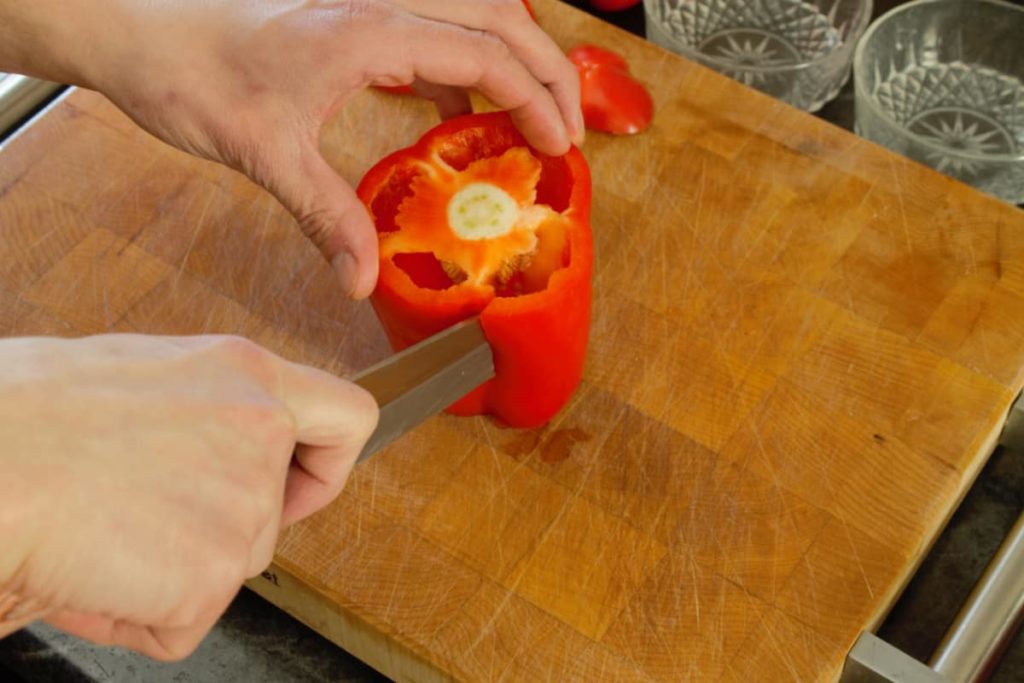
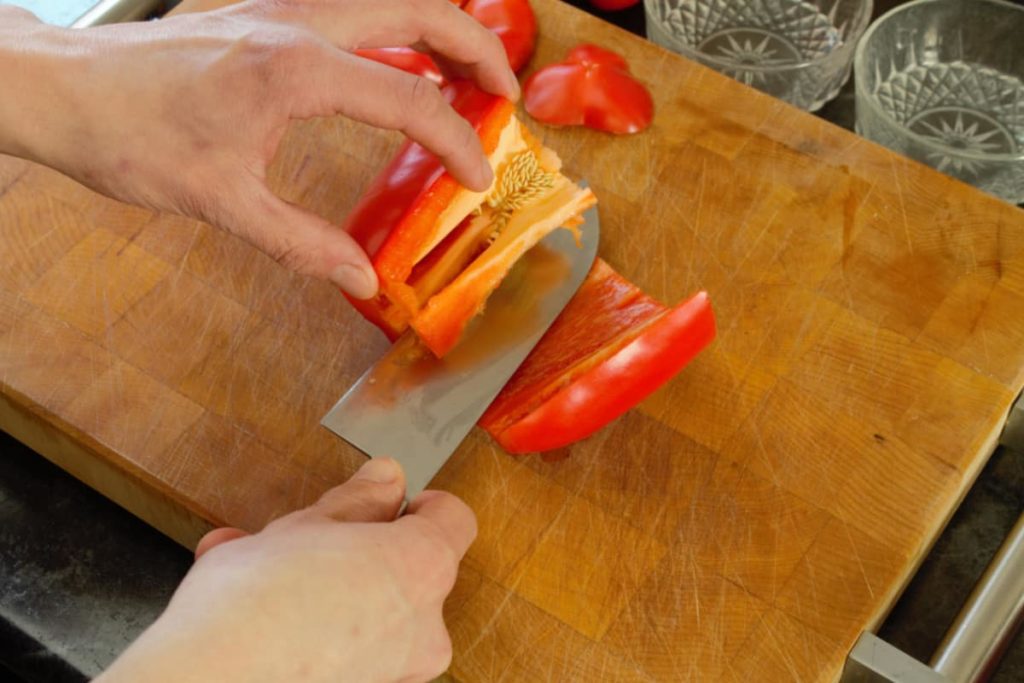
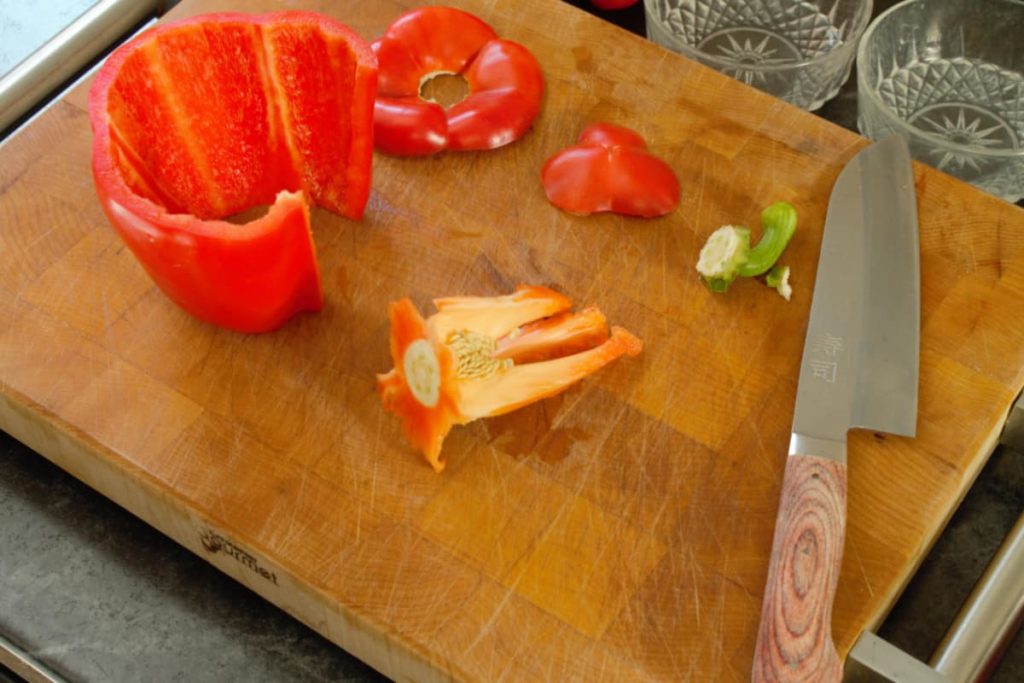
Once the core has been removed, lay the bell pepper skin side down on your cutting board, and carefully remove any white pith from the flesh. Removing the pith makes the pepper evenly thick for the final julienne cut.
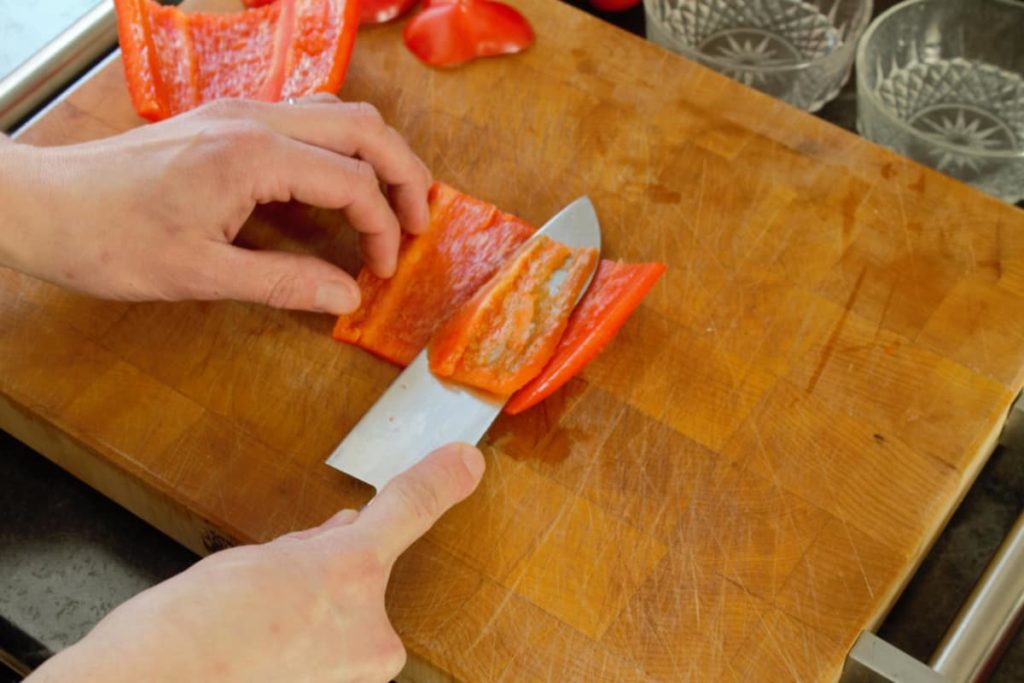
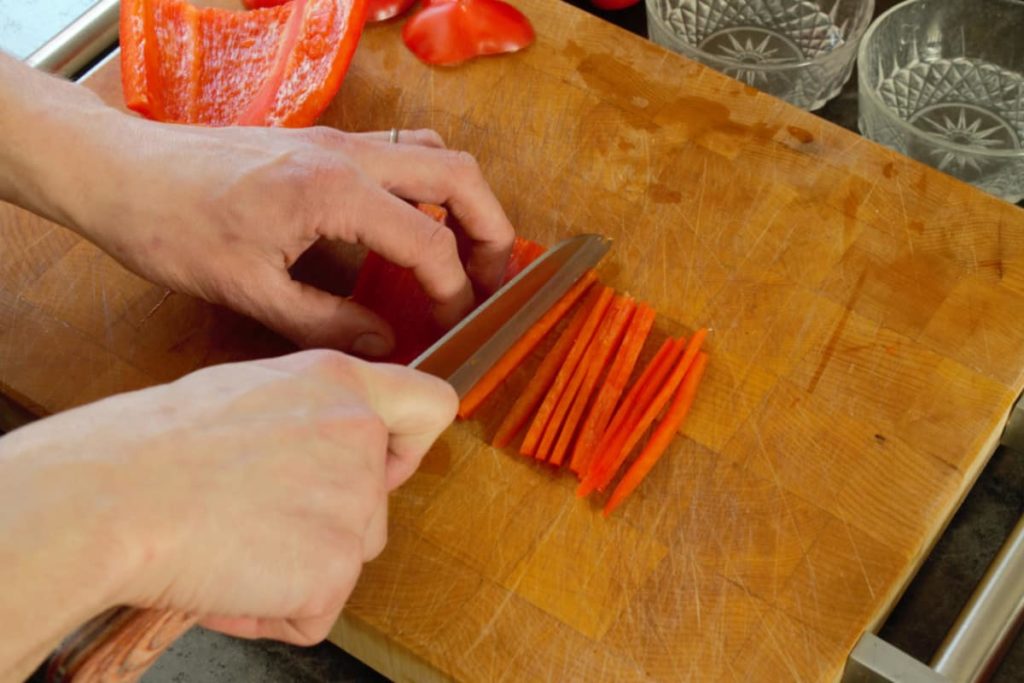
Once the pith has been removed, cut the trimmed bell pepper into a thin julienne, roughly 5 mm wide.
How To Dice Bell Peppers
The second most common way how to cut bell peppers is to dice them - perfect for many general recipes where pieces of pepper are added to the mix.
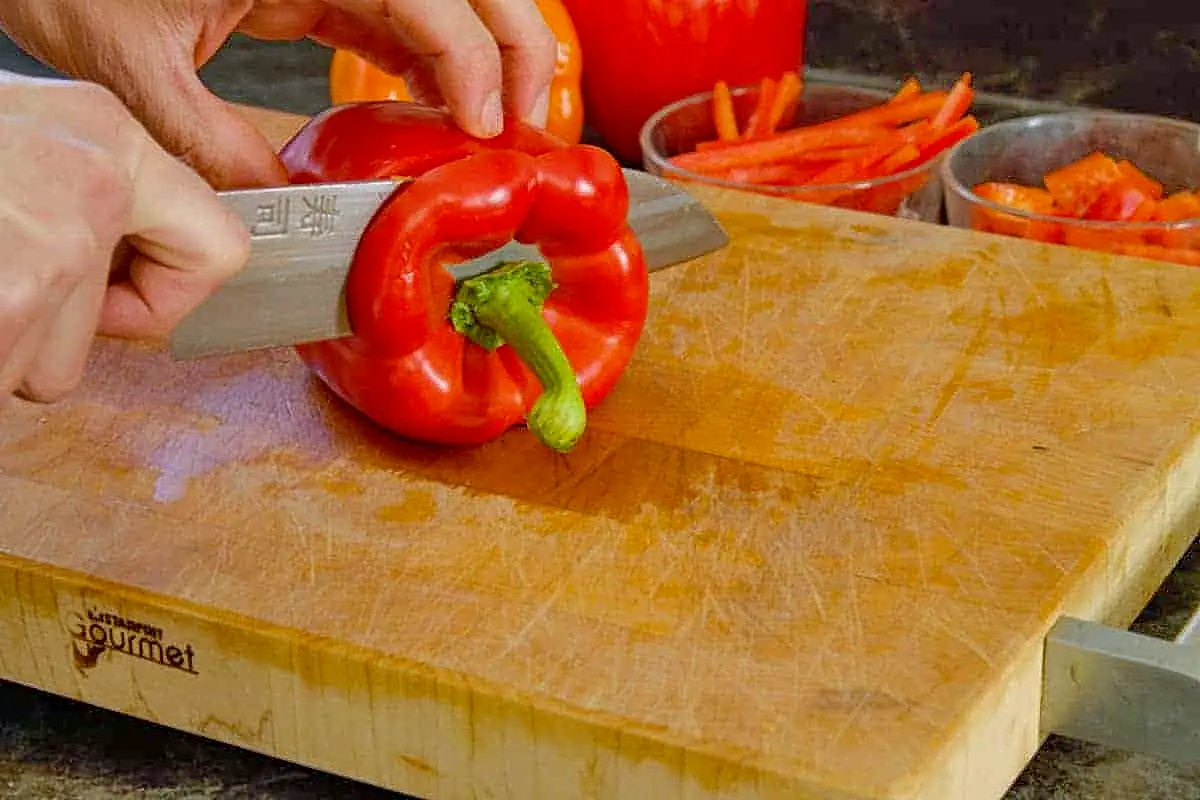
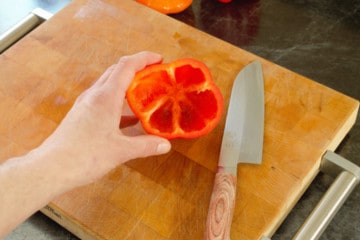
Begin by laying the bell pepper flat on its side, and cut off the top (stem end) and the bottom. Remove and discard the stem if it remains attached to the removed top portion.
Stand the pepper back up and cut open one side of the pepper. Slide your knife along the inside walls of the pepper to release the core and leave you with one long strip of pepper flesh.
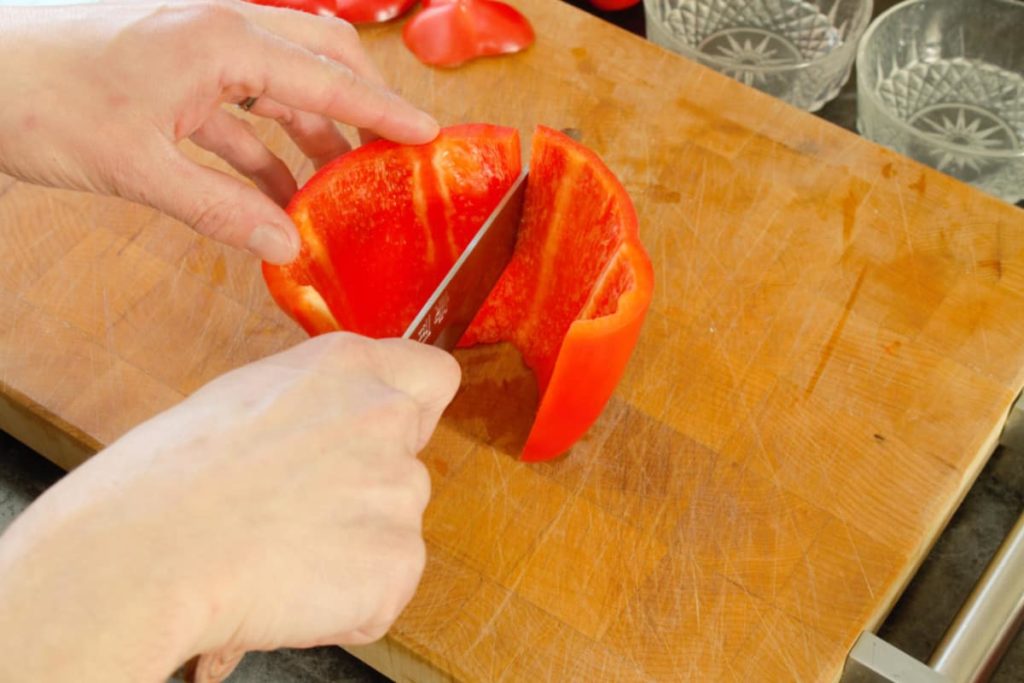
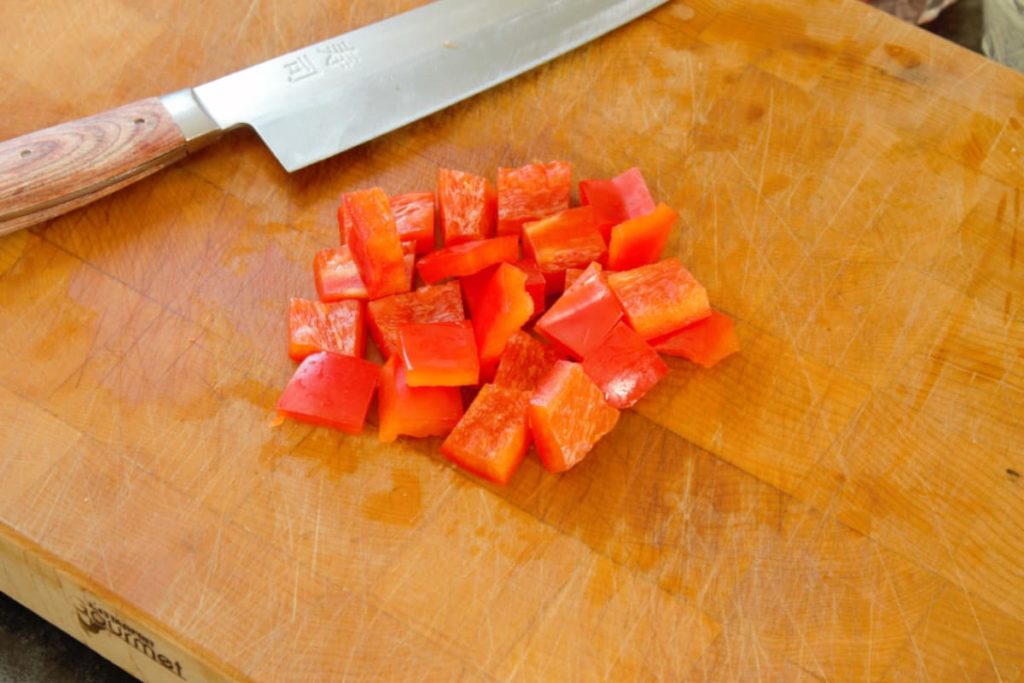
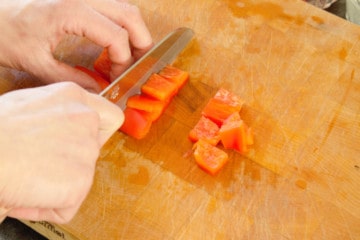
Lay the pepper flat on your cutting board, and cut the pepper into thick strips. Bunch a few of the strips together and cut perpendicular to the strips, dicing the strips into even squares or chunks of pepper.
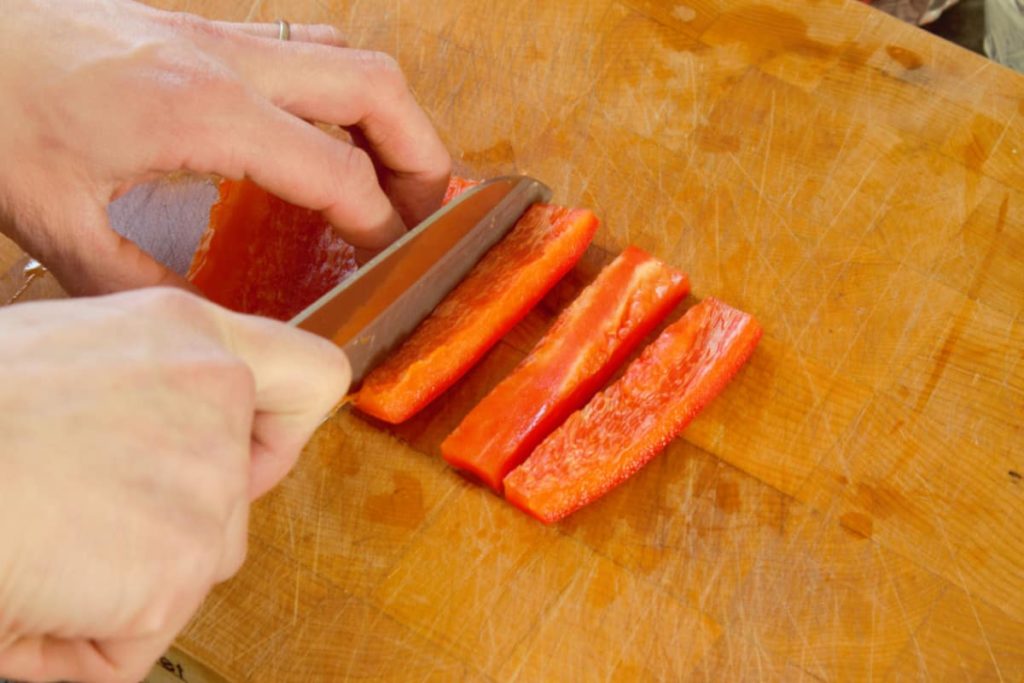
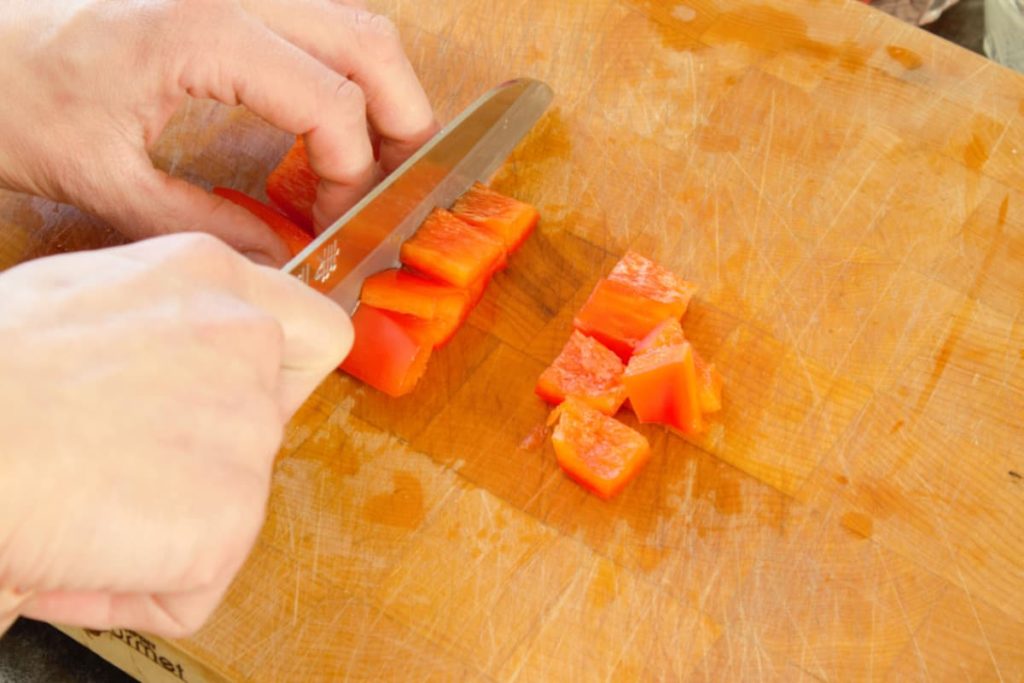
The removed top and bottom of the pepper can then be cut to match the size of the previous cuts.
How To Slice Bell Pepper Rings
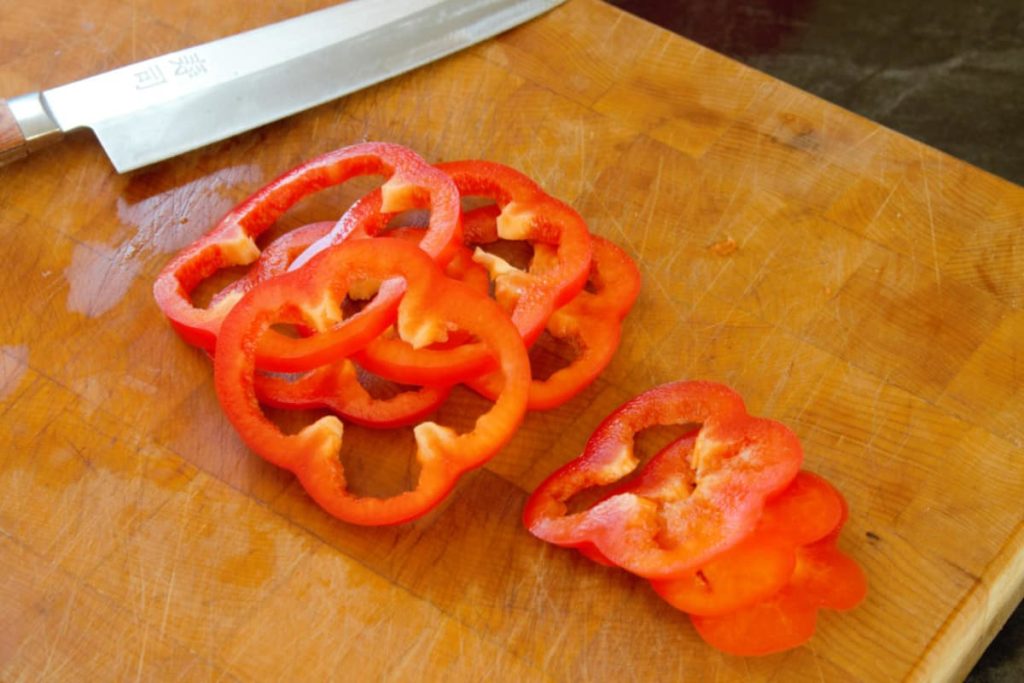
The next way how to cut bell peppers is getting a bit fancy - slicing nice rings from the pepper. These are great as decorative pieces on a plate or in salads.
Lay the pepper flat on its side and remove the top (stem end) of the bell pepper. Leave the bottom end intact - this gives you something to hold on to later, and prevents the pepper from squishing together as easily when you cut the rings.
Remove and discard the core by running your knife along the inside walls of the pepper.
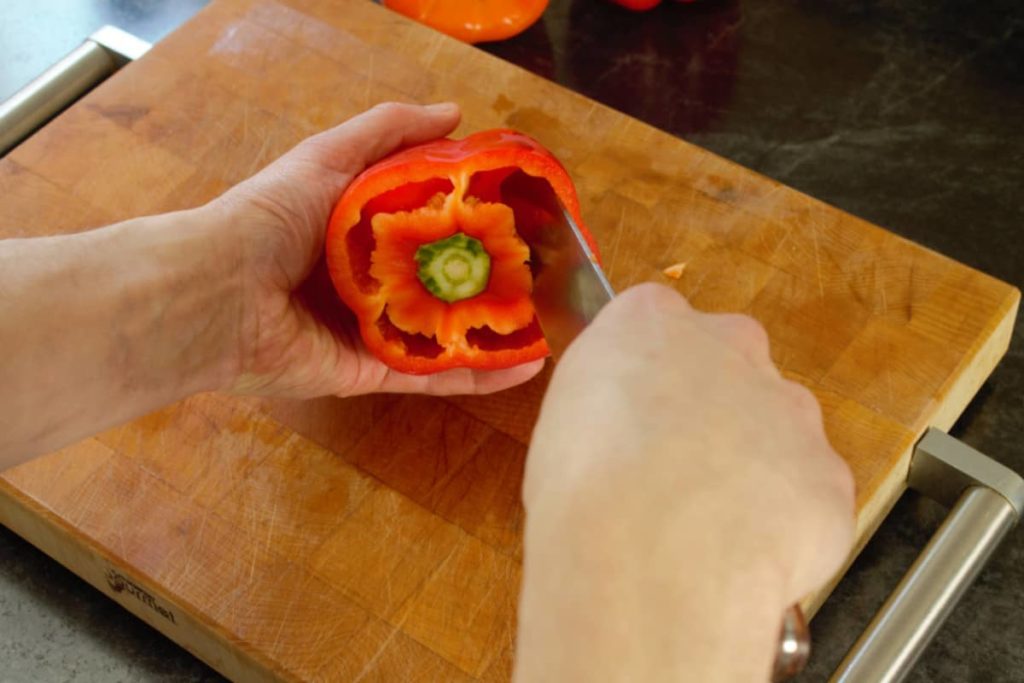
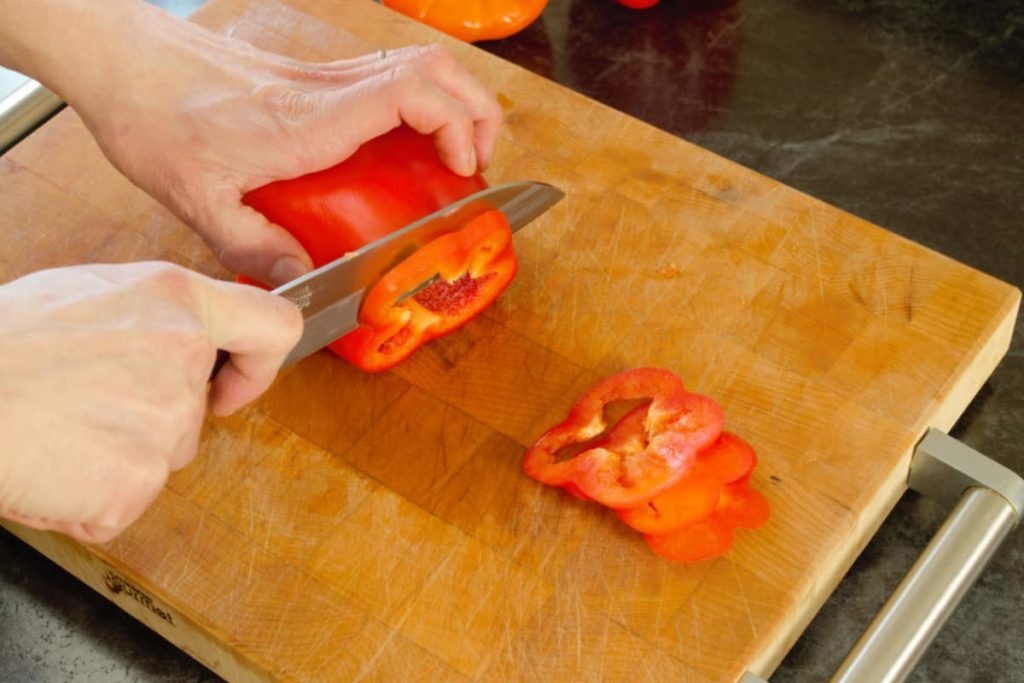
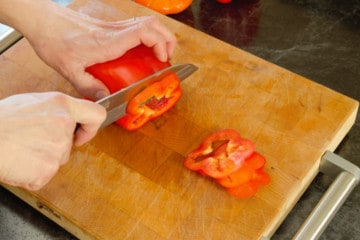
Keeping the pepper flat on its side, cut off thin cross-sections of the pepper with a very sharp knife, leaving you with perfect bell pepper rings.
How To Stuff Bell Pepper
Finally, another useful bell pepper cut is learning how to remove the core without damaging the shell, for when you want to stuff your bell pepper.
Lay the bell pepper flat on its side and remove the top (stem end) of the bell pepper. Save the intact top as a 'lid' if you like.
Trim a very small amount of pepper off the bottom to 'flatten' it out and prevent it from wobbling or falling over when being stuffed. Remove only enough to create a flat base, careful not to create a hole in the bottom of the pepper.
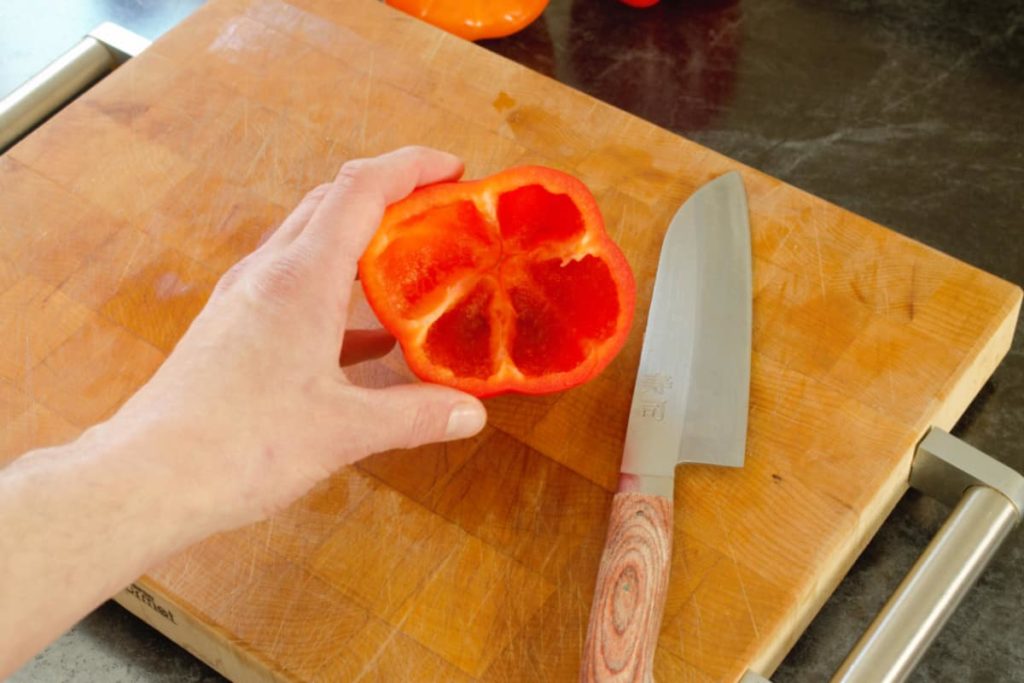
Slide your knife along the inside walls of the pepper to remove the core. Discard the core, and stuff the hollow pepper with a filling of your choice!
Recipe
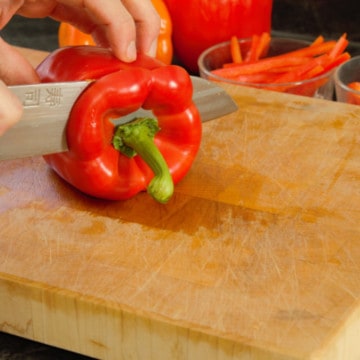
How To Cut Bell Pepper (4 Different Ways)
Equipment
Ingredients
- 1 whole bell pepper
Instructions
Removing A Bell Pepper Core
- Begin by laying the bell pepper flat on its side, and cut off the top (stem end) and the bottom. Remove and discard the stem if it remains attached to the removed top portion. Stand the pepper back up and cut open one side of the pepper. Slide your knife along the inside walls of the pepper, releasing the core and leaving you with one long strip of pepper.
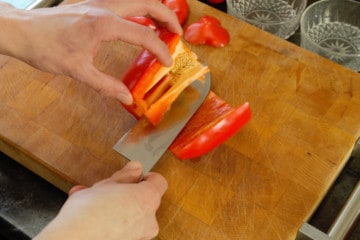
Julienne Bell Pepper
- Once the core has been removed, lay the bell pepper skin side down on your cutting board, and carefully remove any white pith from the flesh. Removing the pith helps to ensure an even thickness of pepper in the final julienne cut.
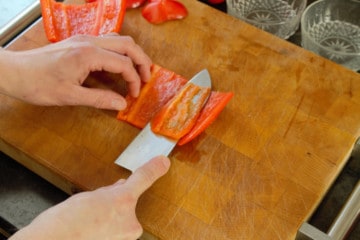
- Once the pith has been removed, cut the trimmed bell pepper into a thin julienne roughly 2mm x 2mm x 4 -5cm long.
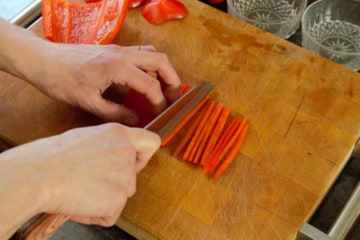
Diced Bell Pepper
- Once the bell pepper core has been removed, lay the pepper flat on your cutting board, and cut the pepper into thick strips.
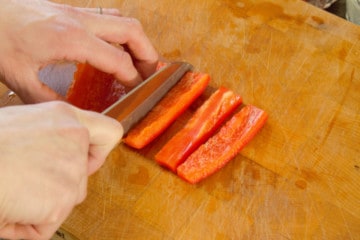
- Bunch a few of the strips together, and cutting perpendicular to the strips, cut the strips into even squares or chunks of pepper.
Sliced Bell Pepper Rings
- After the core has been removed, lay the pepper flat on its side, and cut off thin cross-sections of the pepper with a very sharp knife, leaving you with perfect bell pepper rings.
Stuffed Bell Pepper
- Remove only the top of the pepper (stem end), as well as the core, by running your knife around the inside of the pepper sides, leaving the side intact.
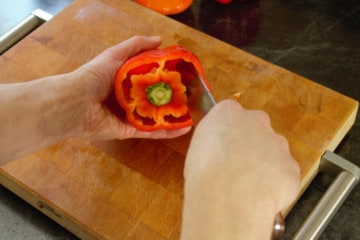
- Once The core has been removed, you may trim the bottom end of the pepper to get it to sit upright. Stuff the hollowed out bell pepper as you see fit.
Nutrition
Nutrition info is auto-generated. This information is an estimate; if you are on a special diet, please use your own calculations.
How To Grow Your Own Bell Peppers
Did you know bell peppers can easily be grown in your own backyard or on a balcony in containers? Being able to grow and provide yourself with fresh produce is a very rewarding feeling. If you are interested, learn how to grow your own bell pepper in our detailed guide!



ANGELICA
This is quite a lesson learned coming from a girl who loves to eat and is just learning to cook. ^_^ Thanks!
Angelica Aredidon
Chef Markus Mueller
You are very welcome Angelica! Glad you found the guide helpful!