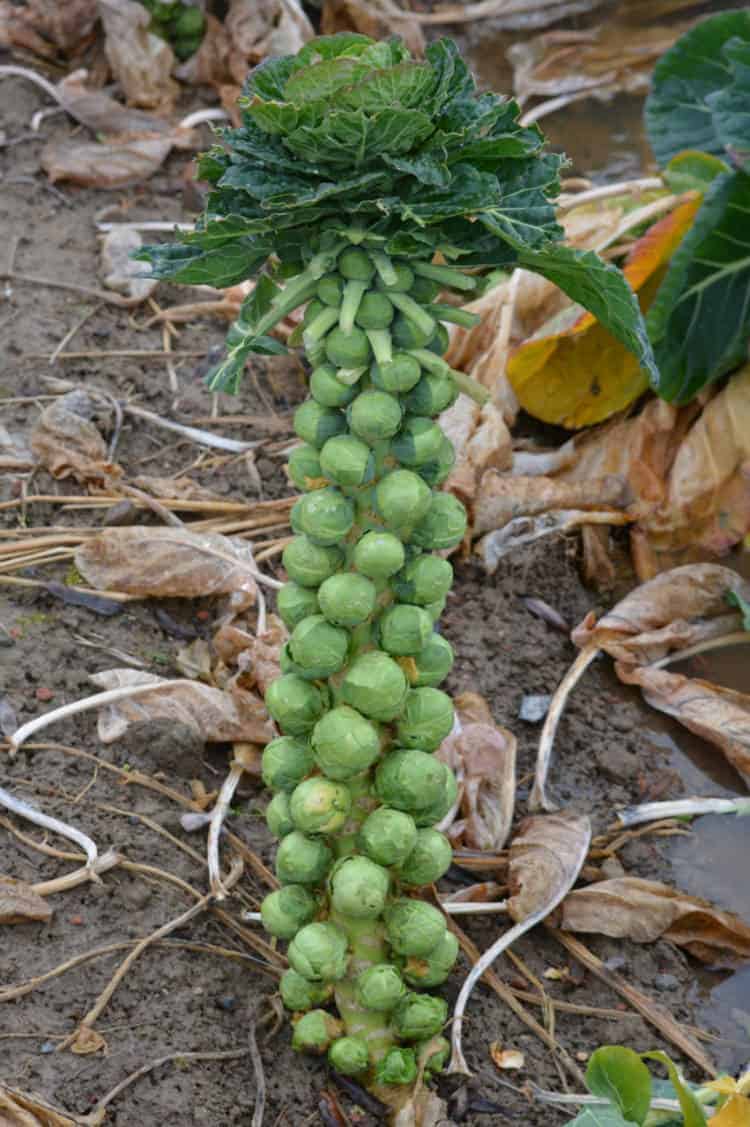
Learning how to grow Brussels sprouts in your home garden is surprisingly easy with a little bit of basic knowledge. If you have never seen how they grow before, it is an incredibly impressive sight!
These cruciferous plants belong to the Brassicaceae family, growing in tall, sturdy columns of harvestable buds. The main stems can reach anywhere from 2 to 4 feet (0.5 to over 1 meter) tall, with broad leaves protecting the emerging sprouts, which look like miniature cabbages, along the leaf nodes.
This post may contain affiliate links for which we may be compensated if a purchase is made through the links provided at no extra cost to you. For more information, please read our affiliate disclosure.
Table of Contents
When and Where Should I Plant Brussels Sprouts?
Brussels sprouts are a cold-weather crop. They have a long growing season, requiring anywhere from 90 to 140 days to harvest. That means you need to start them early in the season. Look at harvest times when selecting the seeds to be sure you can successfully grow them in your area.
Though they will tolerate a light frost (in fact, they say the sprouts are better after a touch of frost), plan to harvest within a week or two after your first fall frost dates. Plan according to your growing season to have a successful harvest.
Start your Brussels sprouts indoors 3 - 4 weeks before your last frost of the season. All you need is a few little 6-pack growing cells, potting soil, and light. In a pinch, even cardboard egg cartons will work!
The seeds germinate quickly and can be transplanted into the garden once they are about 3 inches (7.5 cm) tall and have 6 to 8 leaves.
Where To Plant Brussels Sprouts In Your Garden
Brussels sprouts love sun, so be sure to plant them where they receive 6 - 8 hours of sunlight a day. Because they can be susceptible to club root, be sure to firmly pat down the soil around the base of the transplants to avoid air pockets in the soil.
Work the soil well and add amendments to help improve soil texture and drainage. When planting out your seedlings, it is a good time to add compost and work it well into the planting area. Space the transplants 18 - 24 inches (about 0.5 meters) apart.
Caring for Brussels Sprouts
Depending on where you live, you may want to consider staking your Brussels sprouts. Because of the height of the plants, they can be knocked over if your garden experiences high winds. Simply support the stem with garden stakes. Bamboo poles or sturdy wooden branches work well for this.
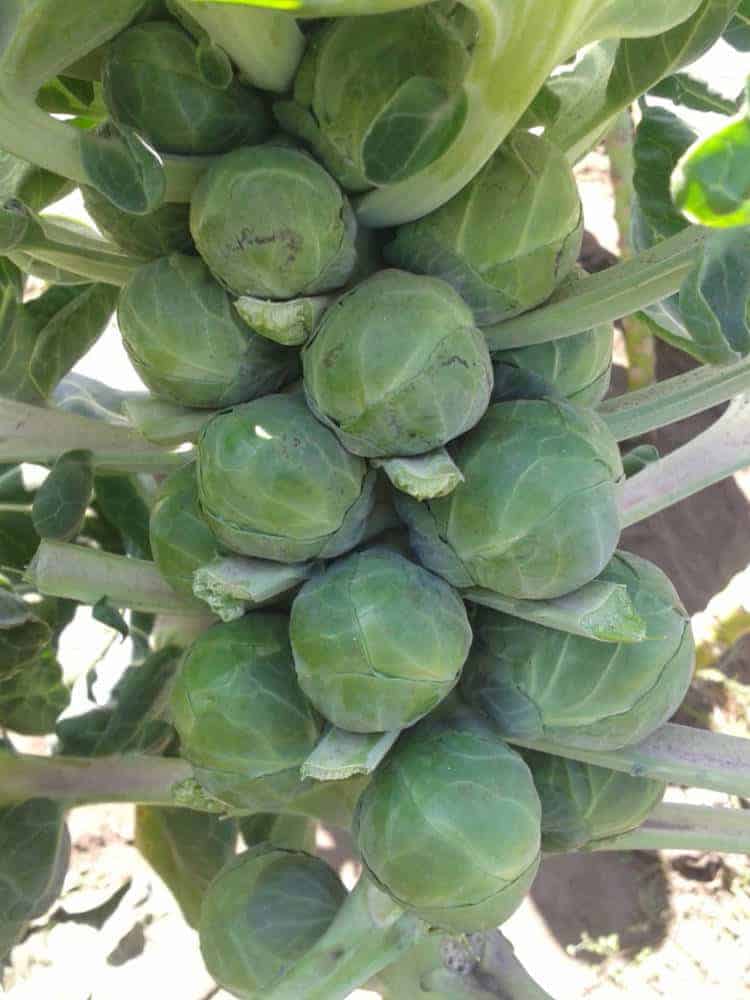
Another important practice when growing Brussels sprouts is to remove the leaves from the bottom of the plants once you see sprouts developing between the leaf nodes. Using sharp handheld pruners or even scissors, remove all the leaves from the bottom ⅔s of the plant.
This helps direct energy into producing nice sized sprouts. You don't need to trim right against the stalk, just remove as much as possible without damaging the emerging sprouts.
Fertilizing Brussels Sprouts
Like all members of the cabbage family, Brussels sprouts are nitrogen hogs, and to have a successful crop, you will want to feed the plants with a nitrogen-rich fertilizer.
Nitrogen is represented by the first number you see on any type of fertilizer, e.g., 20-20-20. Look for a fertilizer where the first number is a bit higher than the other two. Give your Brussels sprouts a good feed every three weeks following the directions for the particular fertilizer you are using.
Note: because Brussels sprouts are such aggressive nitrogen consumers, you will need to plant them in a different location each season using a 4-year crop rotation schedule.
Harvesting Brussels Sprouts
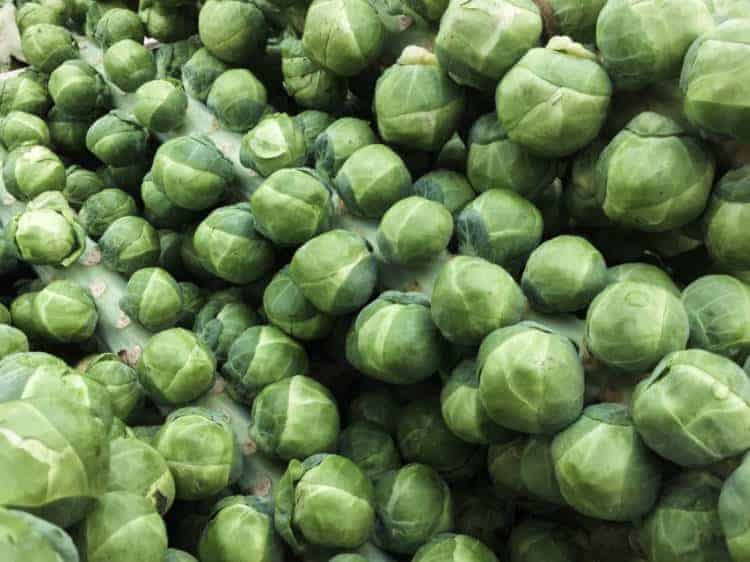
The plants mature from the bottom up, so you can start harvesting the sprouts when they are nicely formed and approximately an inch wide. Starting at the bottom of the plant, give the sprout a good twist and pull down to remove it from the stem. You could also use a small knife.
Only harvest what you need until the forecast dictates otherwise. You can harvest from the base of many plants, allowing the upper sprouts to continue to grow and mature.
If you are doing a large harvest, you can save some time by harvesting the entire stems of sprouts. To harvest the stem, pull the entire plant out of the soil.
Using a sharp knife, remove the roots and the top leaves from the plant. To force everything to mature at the same time, you can top the Brussels sprout plants a week or two before the final harvest.
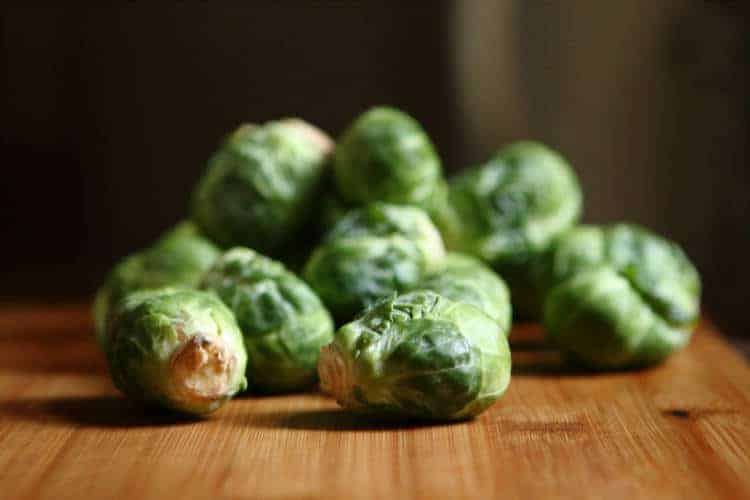
Storing Brussels Sprouts
Brussels sprouts can be stored in the fridge for a week. Give them a good wipe, but do not wash before storing. The extra moisture can cause early rot in your sprouts.
Freezing Brussels Sprouts
Brussels sprouts are also great to freeze. Blanch Brussels sprouts for 2 minutes, then plunge into an ice water bath to stop the cooking. Dry the sprouts as much as possible. Spread the sprouts onto baking sheets and place in the freezer until sprouts are frozen. Bag the sprouts in heavy duty freezer bags.
Try These Brussels Sprouts Recipes!
Once you have successfully grown and harvested your homegrown Brussels sprouts, it is time to enjoy the fruits of your labor in the kitchen! Freshly picked sprouts are incredibly tender and sweet. Here are two of our favorite ways to prepare them:
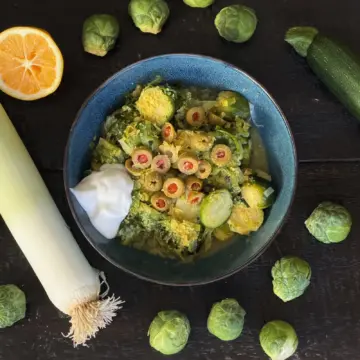
- Warm and Savory: Try our quick sautéed Brussels sprouts recipe made with sweet leeks, zucchini, and green olives. It is a wonderful skillet dish that is ready in under 30 minutes.
- Crisp and Fresh: If you prefer a raw, crunchy texture, try our fresh shaved Brussels sprout salad tossed in a creamy black peppercorn dressing.
Sautéed Brussels Sprouts Recipe (With Leeks, Lemon and Olive)
Shaved Brussels Sprout Salad With A Creamy Black Peppercorn Dressing

Want To Grow More Of You Own Vegetables?
Did you find this guide useful? Comment & rate it below. For more DIY gardening tips & homemade cooking from scratch recipes, follow us on Facebook & Pinterest
Comments
No Comments