
Choosing a watermelon at the grocery store or market can feel a bit like a gamble. There is nothing more disappointing than hauling a massive watermelon home, slicing it open to find a pale, flavorless interior. Fortunately, learning how to pick the best watermelon doesn’t have to be a guessing game.
Since watermelons do not ripen much after they are harvested, the one you select is the one you are stuck with. But there are several reliable visual and physical cues you can look for. Here is how to choose a ripe watermelon using seven simple checks.
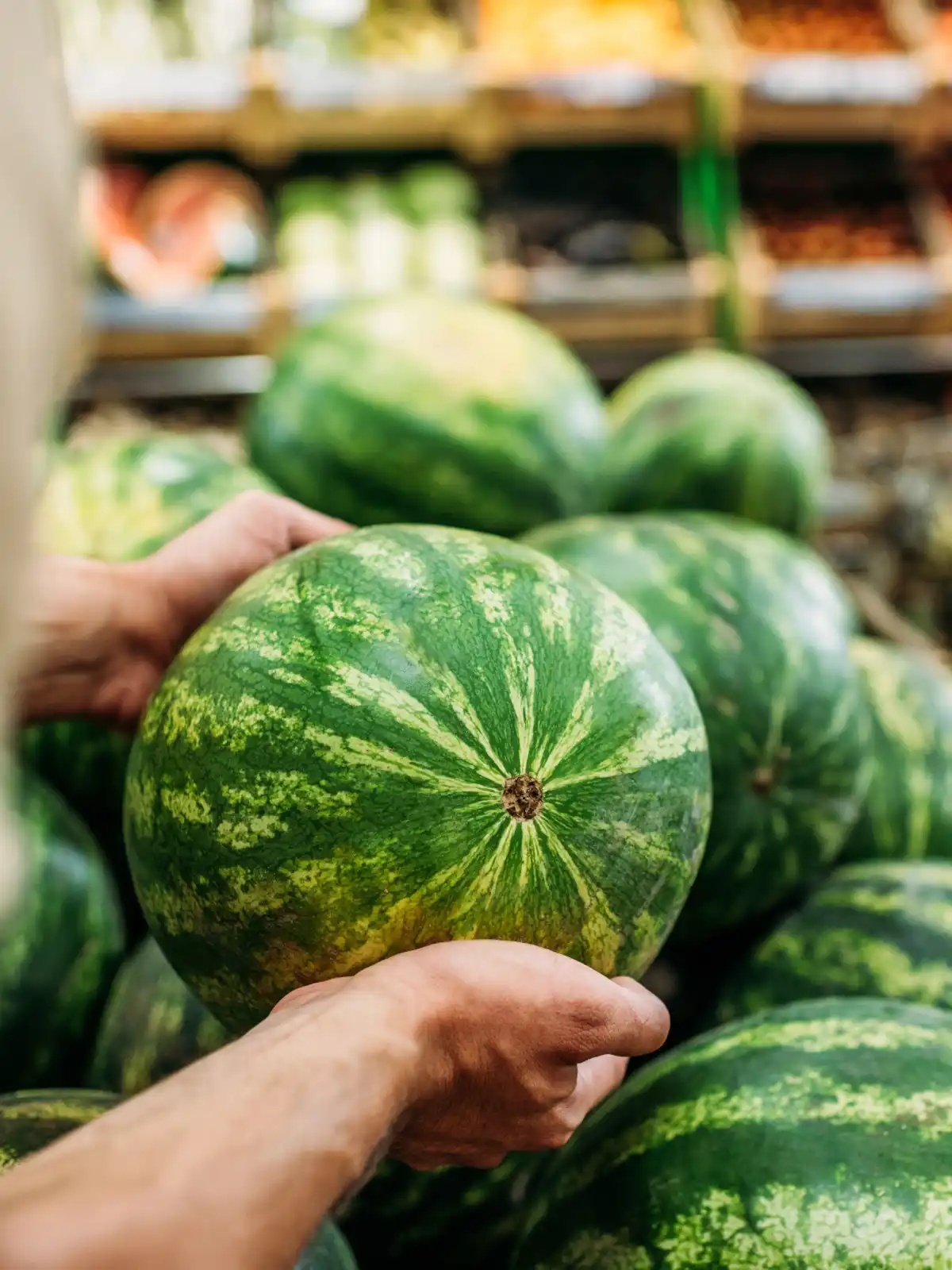
How to Pick the Best Watermelon in the Produce Aisle
Whether you are shopping at a local farmers market or your neighborhood supermarket, use these seven quick and simple checks to pick the best ripe watermelon to put in your cart.
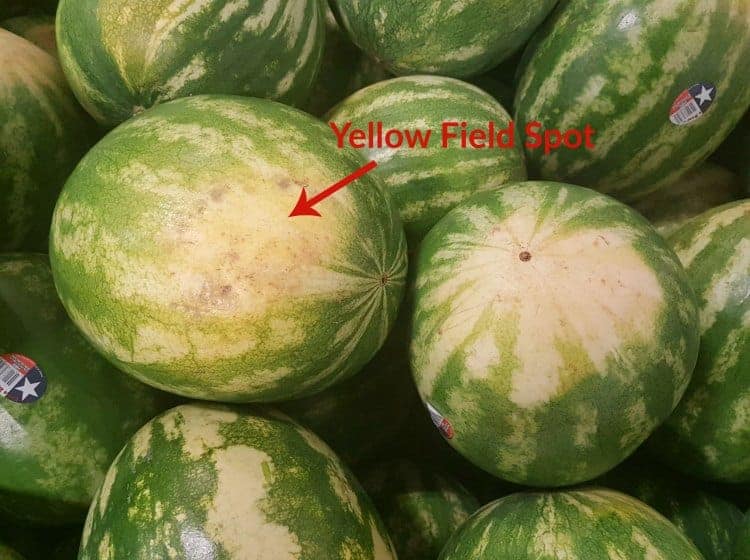
1. Inspect the Field Spot (The Belly)
The field spot, or ground spot, is the patch on the underside of the watermelon where it rested on the ground while growing on the vine.
What to look for: Look for a deep, creamy yellow or buttery gold color.
Why it matters: A creamy yellow spot means the watermelon sat on the vine long enough to ripen and sweeten naturally under the sun. If the spot is white, pale green, or nonexistent, the melon was harvested too early and will likely lack flavor.
2. Give It a Tap (The "Thump" Test)
The classic tapping method is highly effective once you know what sound to listen for. Gently thump or tap the side of the watermelon with your knuckles.
What to look for: Listen for a deep, hollow, resonant echo - similar to a drum.
Why it matters: A deep, resonant sound indicates the fruit is fully hydrated and mature. If the sound is dull, flat, or a tight metallic "clink", the melon is likely underripe. If it makes a soft, mushy thud, it may be overripe and soft inside, with the flesh starting to soften and lose structure.
3. Lift It Up to Gauge the Weight
A ripe watermelon should feel surprisingly heavy for its physical size.
What to look for: Lift up a few watermelons of roughly the same size and compare them. Choose the one that feels the heaviest.
Why it matters: Watermelons are roughly 92% water. A heavy melon has high water content with dense, juicy, and sweet flesh. If a watermelon feels light or hollow for its size, it may have dried out or become mealy inside.
4. Look for Uniform Shape
Inspect the overall shape and structure of the watermelon.
What to look for: Choose a melon that is symmetrical and uniform, whether it is round or oval. Avoid melons with irregular bumps, deep dents, or pointed ends.
Why it matters: Irregular shapes or narrowing ends often mean the melon received inconsistent watering or uneven sunlight while growing. This uneven development can sometimes lead to dry or flavorless patches inside the flesh.
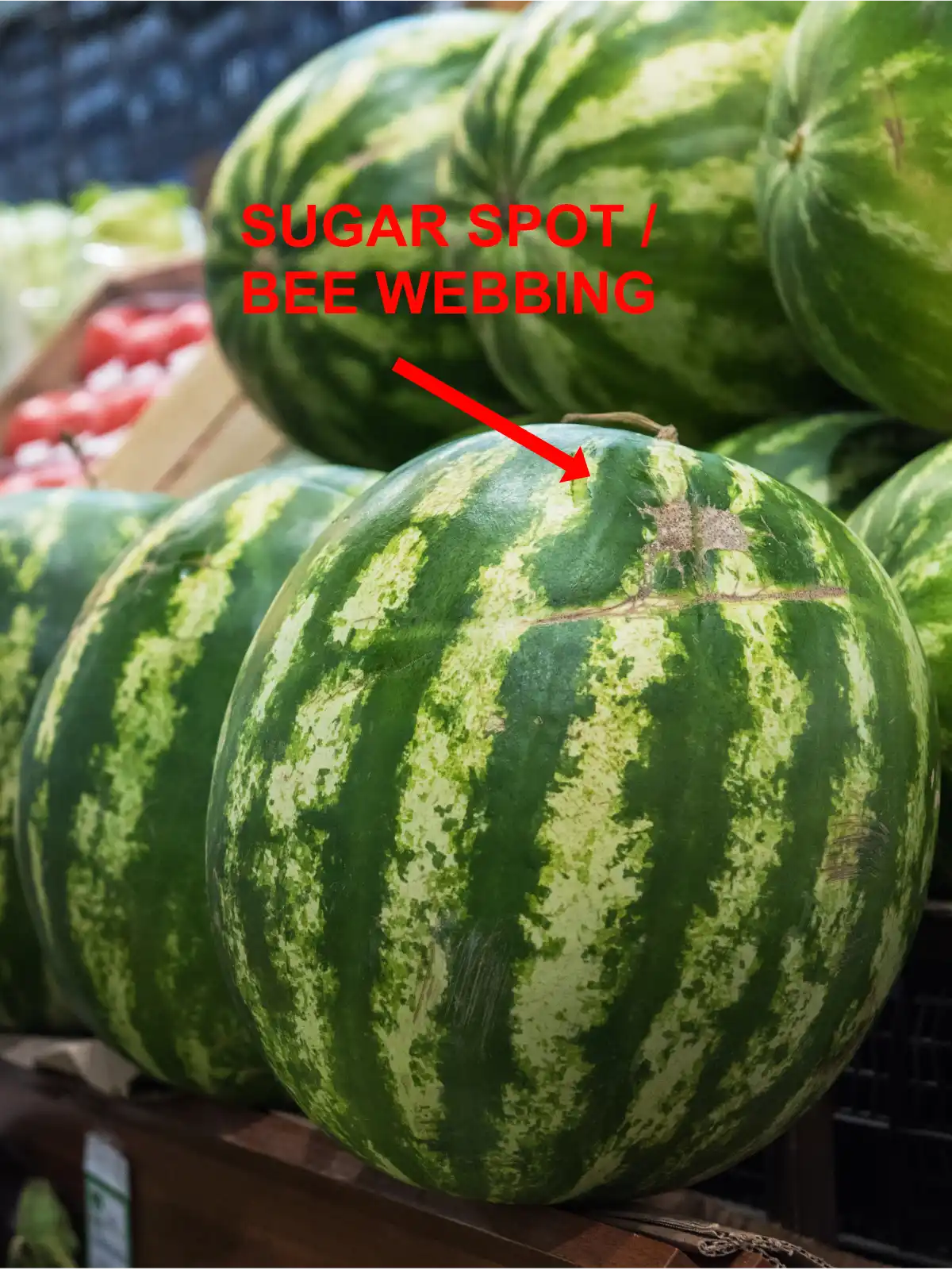
5. Check for "Bee Webbing" (Sugar Spots)
Look for rough, brown, web-like scars on the watermelon skin.
What to look for: Seek out melons with extensive, dry brown webbing on the rind.
Why it matters: These scars aren't dirt or damage, but are called "pollination scars" or "sugar spots." More webbing means bees frequently visited the flower during pollination while the fruit was growing. As a general rule, the uglier melons with lots of web scars are often the sweetest.
6. Examine the Stem End
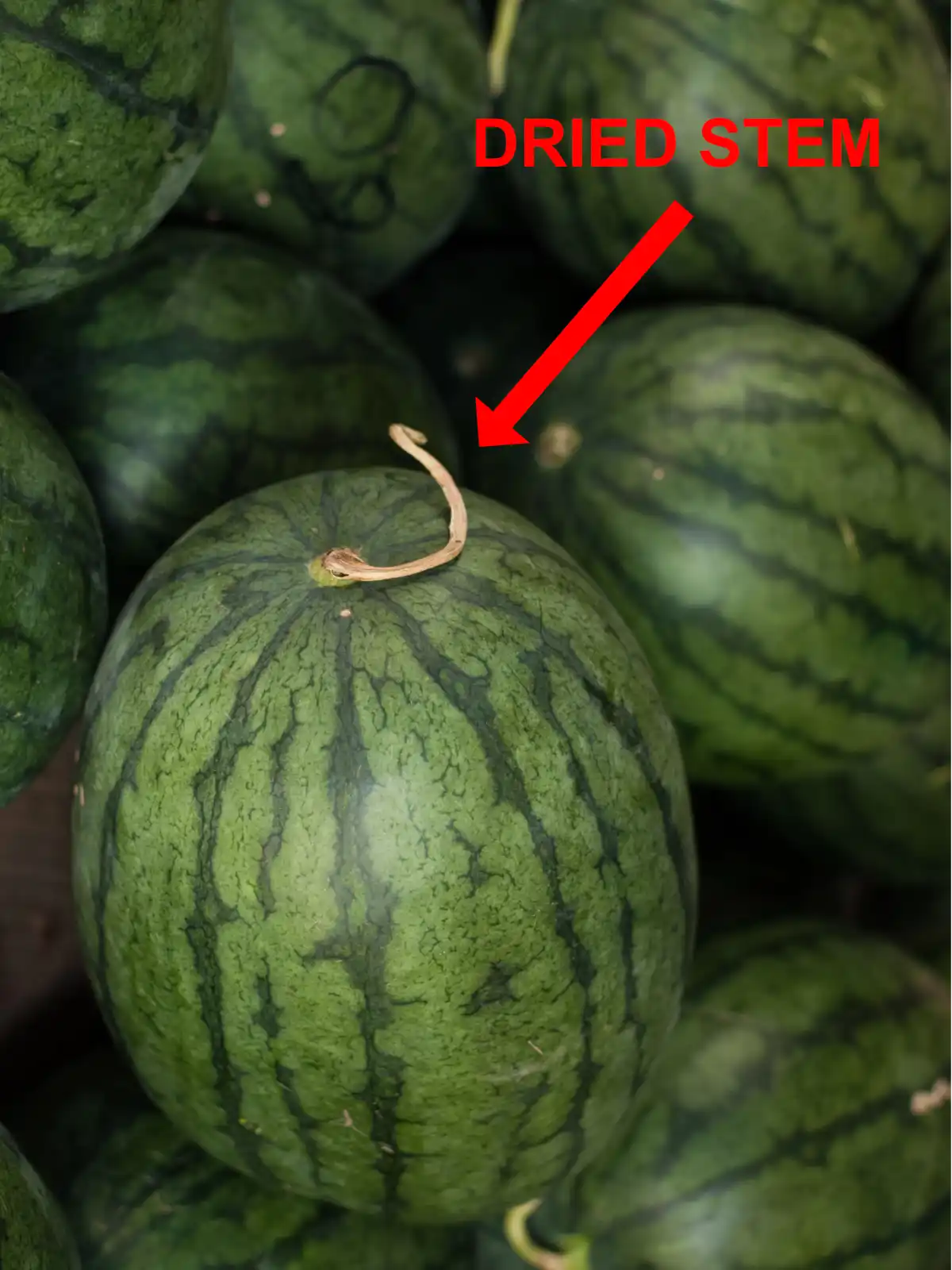
If the stem is still attached to the watermelon, it can offer a clear clue about its harvest time.
What to look for: Look for a dry, brown, or shriveled stem. Avoid melons with green, juicy, or freshly cut stems.
Why it matters: A dried, brown, or slightly shriveled stem indicates that the watermelon fruit detached naturally from the vine, and it was harvested fully ripe. A bright green, cleanly sliced stem suggests the watermelon was cut from the vine by the harvester before it finished ripening and may lack sweetness.
7. Look for a Dull Rind
Do a quick visual check of the overall finish and sheen of the watermelon’s green skin.
What to look for: Choose a watermelon with a dull, matte finish rather than a shiny one.
Why it matters: A shiny rind usually indicates that the fruit is underripe. As a watermelon matures and sweetens, its skin loses its sheen and turns matte. (Note: Some grocery stores apply a light produce wax to melons, which can make them shiny. If that's the case, you will need to rely on the other six indicators.)
Bonus cheat: Ask the expert
If finding a truly ripe and sweet watermelon still feels like a bit of a challenge, and you happen to live somewhere where watermelons are locally grown and in season, here is a little cheat tip that gives you an easy way out:
Just go to the farmers market and get the farmer to pick one out for you! They know what they are doing and can take the guesswork out of it.
Does This Apply to Seedless Watermelons?
Yes. Whether you are buying traditional seeded watermelons, seedless varieties, or small personal-sized mini watermelons, the guidelines how to pick the best watermelon remain the same. Every variety relies on the same growing principles, meaning field spots, weight, and sound are universal indicators of ripeness.
Quick "How to Pick the Best Watermelon" Checklist
If you are standing in the store deciding how to choose a ripe watermelon, here is a quick reference checklist:
- Belly check: Creamy yellow, not white.
- Sound check: Deep, hollow ring.
- Weight check: Heavy and dense.
- Shape check: Symmetrical and uniform.
- Webbing check: Rough, brown pollination lines.
- Stem check: Dried and brown, not green.
- Finish check: Dull and matte, not shiny.
How to Store Your Watermelon
Once you have selected the perfect watermelon, here are a few tips on how to store it so it stays fresh and flavorful:
- Whole watermelon: Keep uncut watermelons at room temperature on your counter. They will stay fresh for about 7 to 10 days. Do not store whole melons in cold temperatures, i.e., in the fridge, as prolonged cold can degrade their flavor and texture over time.
- Cut watermelon: Once you slice into the watermelon, wrap the cut ends tightly in plastic wrap or store cubes in an airtight container. Keep it in the refrigerator and consume it within 5 days.
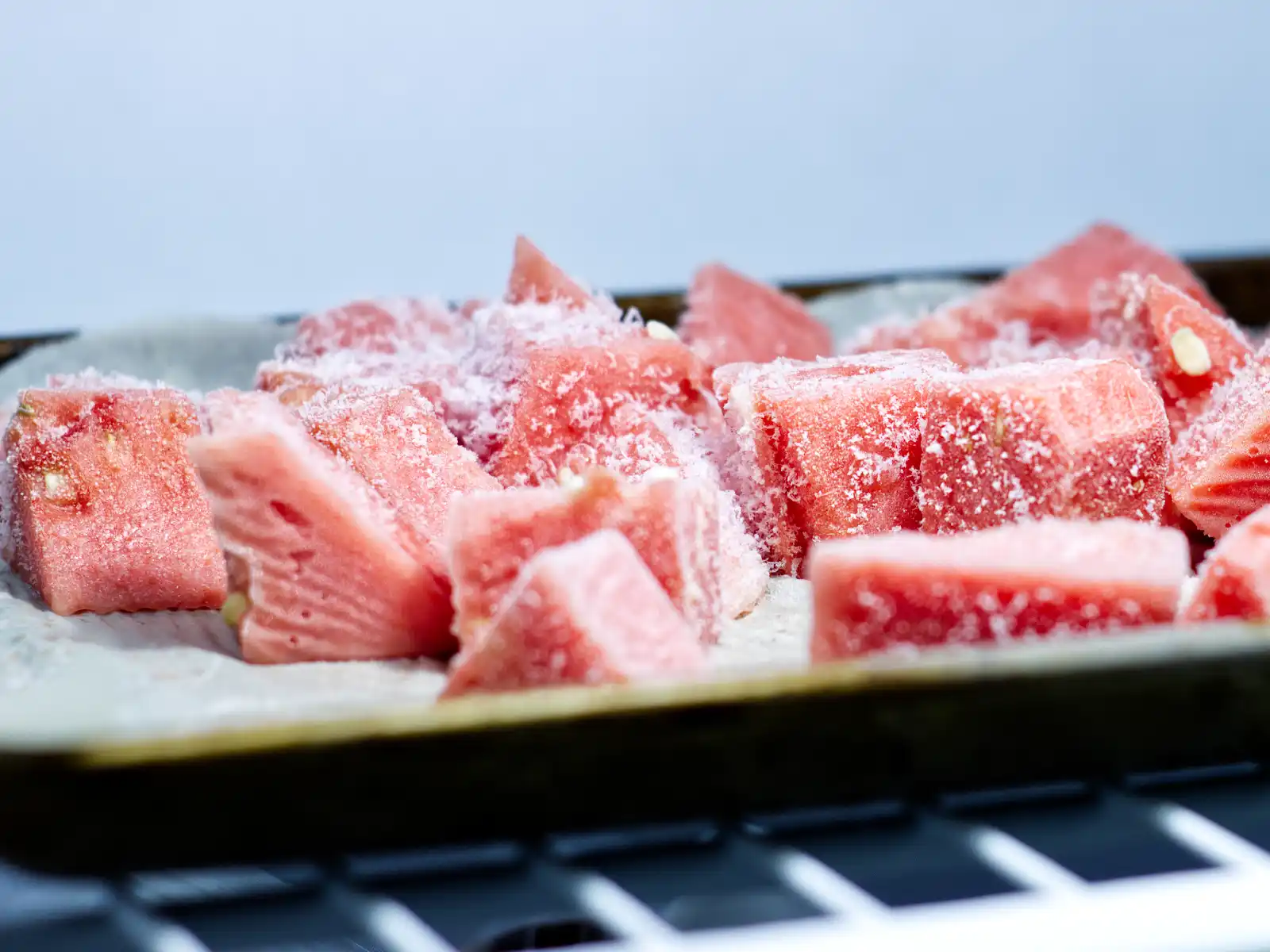
- Freezing cubed watermelon: If you cannot finish the melon in time, cut the flesh into cubes, freeze them on a baking sheet, and transfer them to a freezer bag. Frozen watermelon is excellent for blending into summer drinks. Check out our Watermelon slushie recipe.
Try Watermelon In Refreshing Summer Recipes
Sweet and full of refreshing, juicy fruit, ripe watermelon always reminds me of summers as a child. Playing all afternoon in the hot summer sun, then cooling down with freshly sliced watermelon - there's nothing better on a hot day!
But if you have more watermelon than you can eat fresh, try using it in these delicious summer watermelon recipes:
Creamy Strawberry Watermelon Smoothie

1-Ingredient Watermelon Popsicles

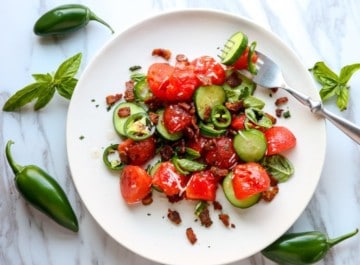
Watermelon Salad with Jalapeno and Bacon
Watermelon Slushie

Watermelon & Tuna Crudo

Raw Watermelon Candy
Did you find this guide useful? Comment & rate it below. For more DIY gardening tips & homemade cooking from scratch recipes, follow us on Facebook & Pinterest



GreenGrocer
I was told the thumping approach doesn't mean much. You can still get an unripe watermelon or one that has too much juice. Only in extreme cases like a nearly rotten watermelon has meaning. It's best to pinch the ends of the watermelon. It should not be too hard or too soft.
Chef Markus Mueller
So far the thumping method has worked pretty well for me, but I'll keep an eye out and see if it keeps holding true. Thanks for the tip about checking the ends! just like a cucumber eh!