
Fiddleheads are a delicious wild spring vegetable, only available for two or three weeks of the year. Their short availability makes them quite expensive if you don't want to forage for them yourself. Since fiddleheads don't particularly store well fresh, freezing fiddleheads is a great way to store them for use later in the year.
Fiddleheads are great sauteed with onions and garlic, make a great side for grilled meats, fish, and shellfish, and are super tasty in pasta dishes! Follow these simple steps to enjoy fiddleheads year round!
This post may contain affiliate links for which we may be compensated if a purchase is made through the links provided at no extra cost to you. For more information, please read our affiliate disclosure.
How Long Can You Keep Fiddleheads In The Fridge?
Fiddleheads are the very young shoots of the Ostrich Fern, and grow across North America in wet, wild woodlands. This is, of course, an ideal breeding ground for bacteria and mold, making fresh fiddleheads susceptible to rot and spoiling quickly.
Cleaning and storing fiddleheads properly can help extend their shelf life, but even then, they usually only last about a week before going bad under regular refrigeration.
You can extend this to a couple of weeks by first cleaning the fiddleheads extremely well and then storing them submerged in water in the fridge.
You can also pickle fiddleheads to extend their shelf life by a month or so.
How To Freeze Fiddleheads For Long Term Storage
Freezing fiddleheads is quite easy and is, in my opinion, the best way to store a large batch of fiddleheads. Plus, properly cleaned and prepared frozen fiddleheads will last a whole year in the freezer.
You'll need:
- A large pot filled with water
- salt
- cold running water or an ice bath
- a spider or other sieve
- 1-2 lbs cleaned fiddleheads
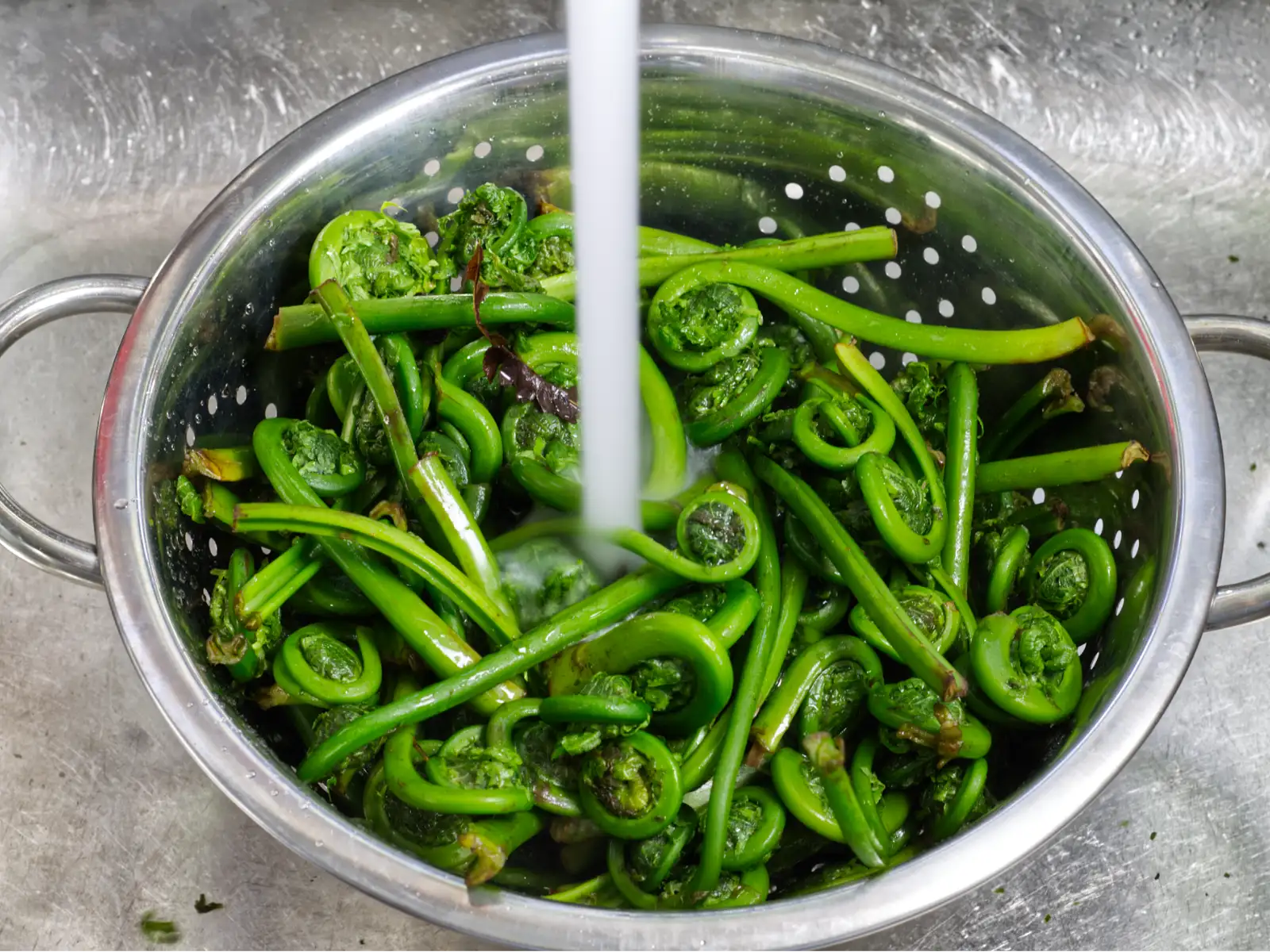
First, you'll need to clean and trim the fiddleheads if you did not purchase them prepared. This is followed by blanching them to par-cook the fiddleheads, shocking them in cold water, and finally freezing them.
The blanching kills any bacteria that may be present on the fern heads. Shocking the fiddleheads with cold water immediately stops the cooking process and prevents overcooking. Shocking any blanched vegetable also preserves vibrant color, crisp texture, and nutrients, keeping it looking fresher.
Spring Fiddlehead Sausage Penne

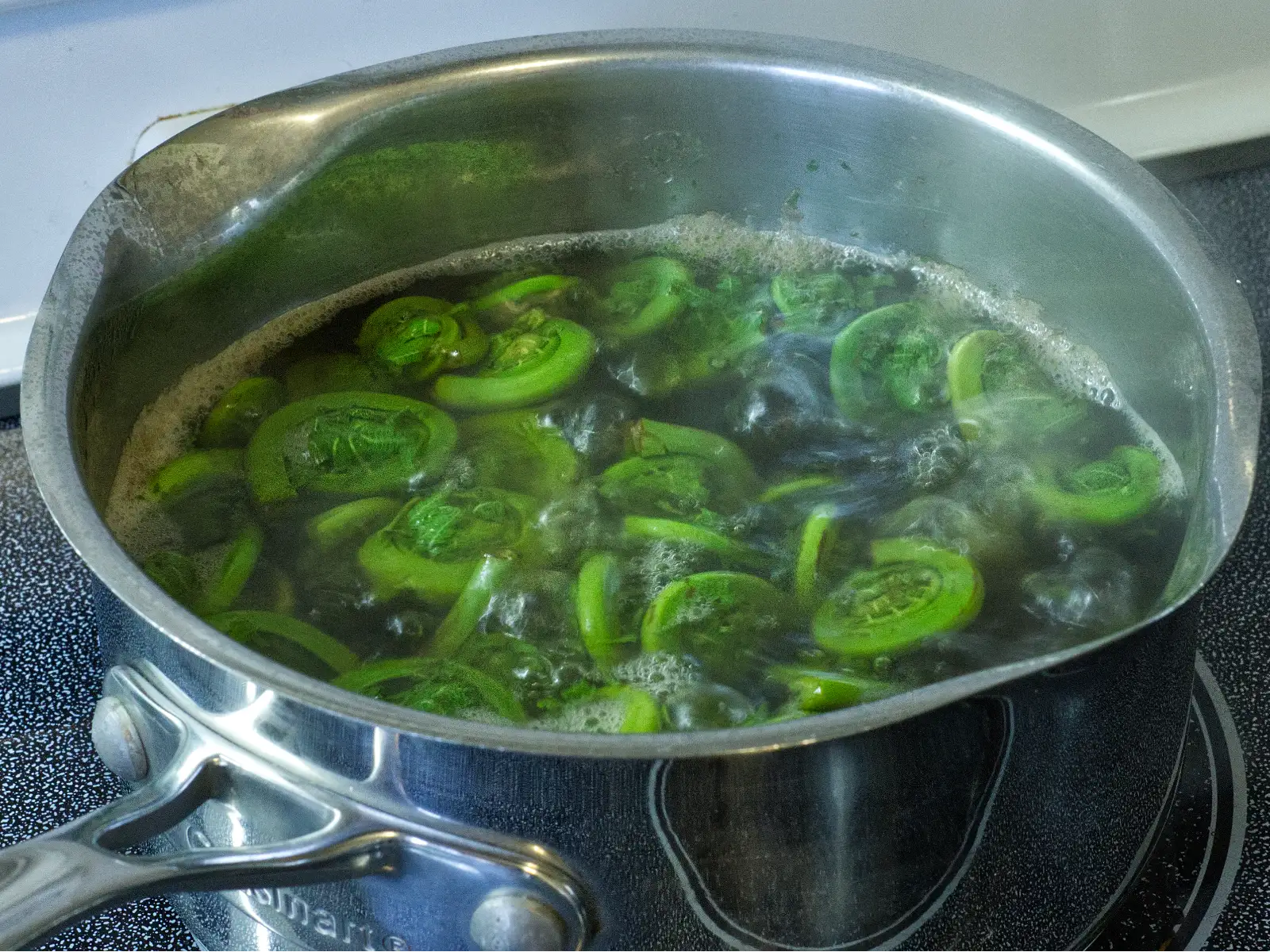
Blanching Fiddleheads
- Set a pot of water on the stove to boil over high heat. Make sure it is large enough to easily fit all the fiddleheads you plan on freezing and the extra water.
- Liberally salt the water.
- Once the water is boiling, dump in the fiddleheads, and stir them a few times to distribute them evenly.
- Let the water return to a boil, then cook the fiddleheads for 30 seconds.
- Immediately scoop out the fiddleheads and transfer them into an ice bath or run them under cold running water to stop the cooking process.
Freezing Fiddleheads
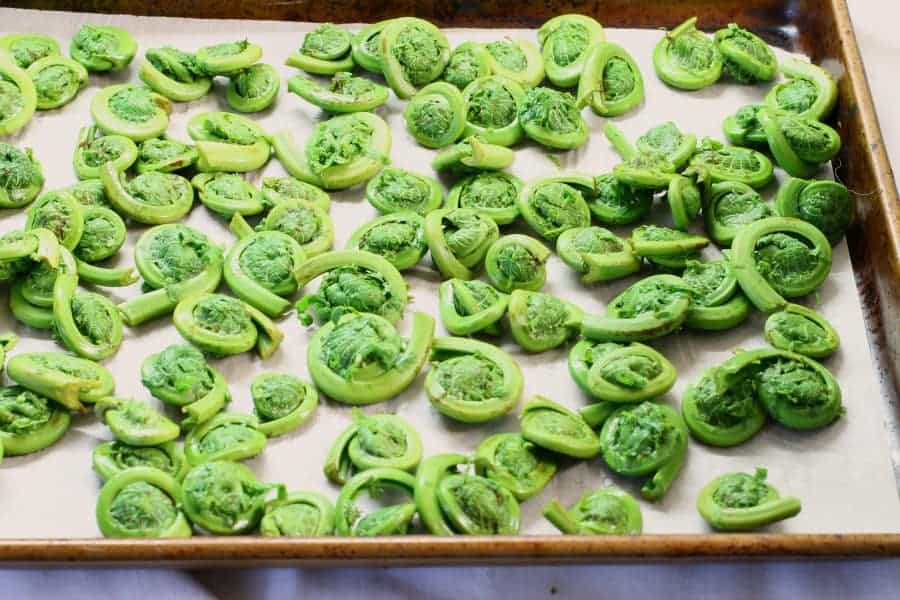
You want to Individually Quick Freeze (IQF) the fiddleheads. That is a fancy name for freezing them separately, before packing the frozen fiddleheads into the freezer storage bag. That way, the fiddleheads will be easier to separate, so you can use just the amount needed, rather than defrosting the entire bag.
- Once the fiddleheads have been blanched and cooled, spread them out on a clean dish towel and pat them dry.
- Spread the blanched fiddleheads on a cookie sheet lined with parchment, making sure they are spread out in an even layer.
- Place the tray in the freezer and let the fiddleheads freeze. They should take about 30 minutes to get solid frozen.
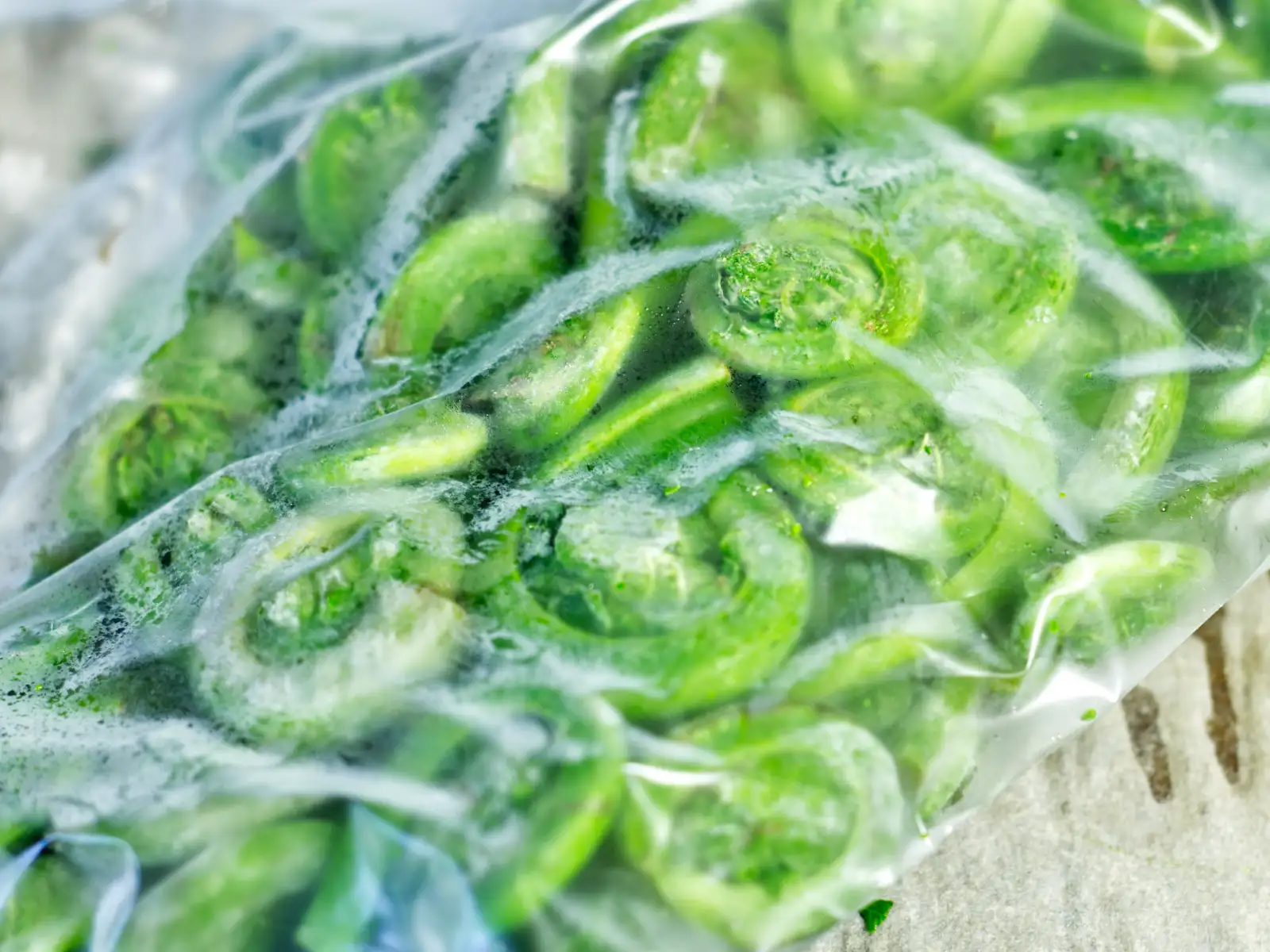
- Once the fiddleheads are frozen solid, you can move them to a Ziploc freezer bag to save on freezer space. Suck out as much air as possible before tightly sealing the bag. If you have the option, vacuum sealing the fiddleheads is even better. Label and date the bags.
- Return the repacked fiddlehead bags to the freezer. They will last for up to one year.
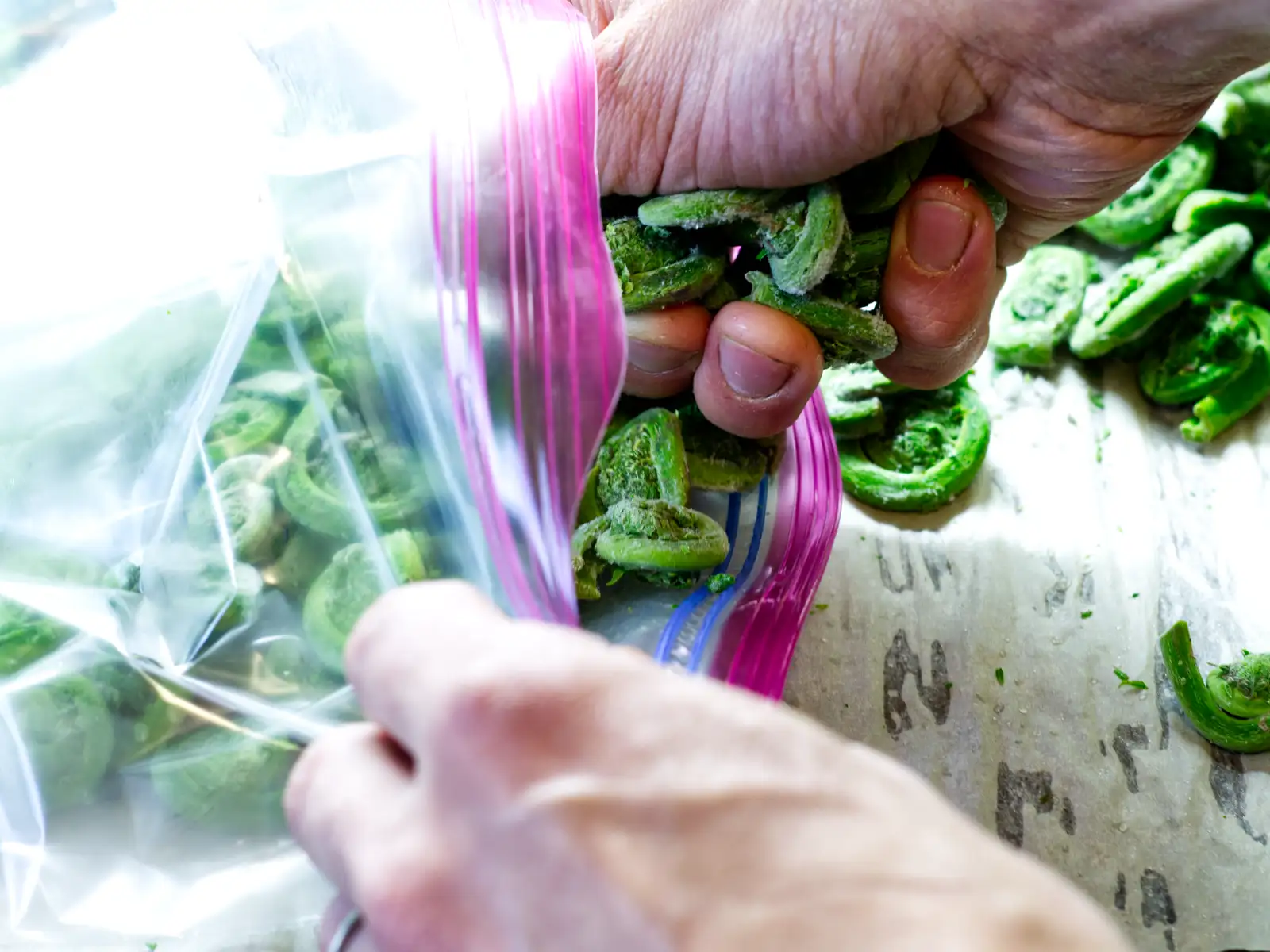
If using ziploc bags to store the IQF fiddleheads, suck out as much air as possible before tightly sealing the bag. This will help prevent freezer burn, and increase the quality of the frozen fiddleheads once thawed. - Chef Markus Mueller
How To Use Frozen Fiddleheads
When you are ready to use your frozen fiddleheads, simply take them out of the freezer and thaw them in the fridge. Once thawed, proceed to use the fiddleheads as you would use fresh ones.
Frozen and thawed fiddleheads should still be cooked for at least 10 to 15 minutes before consuming to help prevent food poisoning.
Once defrosted, do not save and re-use leftovers.
Did you find this guide useful? Comment & rate it below. For more DIY gardening tips & homemade cooking from scratch recipes, follow us on Facebook & Pinterest
Recipe
Freezing Fiddleheads
Ingredients
- 1 large pot filled with water
- 2 tablespoon salt
- cold running water or an ice bath
- 1 spider or other sieve
- 1-2 lbs cleaned fiddleheads
- 1 a cookie sheet lined with parchment
Instructions
Blanching Fiddleheads
- Clean and trim the fiddleheads, if you did not purchase them already cleaned.
- Set a pot of water on the stove to boil over high heat.
- Liberally salt the water.
- Once the water is boiling, dump in the fiddleheads, and stir them a few times to distribute them evenly.
- Let the water come back to a boil, and let the fiddleheads cook for 30 seconds.
- Immediately scoop out the fiddleheads and transfer them into an ice bath or run them under cold running water to stop the cooking process.
Freezing Fiddleheads
- When the fiddleheads have been blanched and cooled, spread them out on a clean dish towel and pat them dry.
- Spread the blanched fiddleheads on a cookie sheet lined with parchment, making sure they are spread out in an even layer.
- Place the tray in the freezer and let the fiddleheads freeze. They should take about 30 minutes to get solid frozen.
- Place the frozen fiddleheads in a ziploc feezer bag, or if you have the option, vacuum seal the fiddleheads. Label and date the bags.
Notes
- When you are ready to use your frozen fiddleheads, simply take them out of the freezer and thaw them in the fridge.
- Once thawed, use the fiddleheads as you would use fresh ones.
- Frozen and thawed fiddleheads should still be cooked for at least 6 to 8 minutes before consuming to help prevent food poisoning.
- Once defrosted, do not save and re-use leftovers.
Nutrition
Nutrition info is auto-generated. This information is an estimate; if you are on a special diet, please use your own calculations.
Jane
Can you just wash them,cut stems off and vacuum seal them to freeze without blanching them?
Markus and Bianca Kuchar
Hi Jane, to be honest, I have never tried without blanching - I have my method that works. That said, it seems you do not have to blanch the fiddleheads if you plan to use them soon. But since the whole point of freezing them is to store them long term, you want to blanch them - they might go ugly black and very mushy over time if not blanched. Also, I have read about people vacuum-sealing the fiddleheads before freezing, instead of blanching, which should prevent the discoloration - but I have not tried that myself either.
Margaret Clutter
I have been in Maine my whole life. My family loves fiddleheads deep fried in beer batter.
( blanch and cool before putting in batter)
Gio
Hi there! After blanching, freezing then thawing the fiddle heads, what’s the recommended cooking procedure? 6-8 minutes of boiling after thawed or in a pan? I keep getting confused doing this research.
Chef Markus
Hi Gio, running of the official Health Canada advice: You should always boil the fiddleheads for 15 minutes, or steam them for 10 to 12 minutes in a separate batch of water, that is discarded, before sautéing, frying, baking, or even putting them in a soup. That is for the food safety. If you then plan to fry them, I would pat dry them, as any water will splutter with the oil. For further cooking in a soup or similar, I would add them as a last ingredient, just to warm up - they are already cooked well.
Lori
I recently received fiddleheads from a friend up north. I've cooked them and using some for a quiche. Can I freeze the remainder? They are cooked, not blanched.
Chef Markus Mueller
Hi Lori, yes you can freeze them. Just keep in mind they will be quite soft, and loose some water during the thawing process.
Allie
I have fiddleheads frozen from last year would it be possible to thaw them and can/pickle them?
Chef Markus Mueller
Hi Allie, while you could certainly thaw and pickle them, keep in mind that freezing/thawing the fiddle heads will change their texture and they will naturally be softer and no longer crisp. If you are doing a hot pickle, I would suggest not thawing the fiddleheads first and instead adding the hot pickling liquid directly to the frozen fiddleheads to preserve as much texture as possible.
caroline farus
I am enjoying fiddleheads after many years away. I am now 94 and back in in NE.. a land I love!
andrea
why do you say to not re use leftovers?
Chef Markus Mueller
Hi Andrea, I always advise folks not to re-use leftover cooked fiddle heads, because they are already a 'high-risk' food in regards to food borne illness to begin with (due to their tightly curled nature, bacteria can get caught in the leaves/frilly edges and can be hard to remove). As such as I always advise folks to only cook and eat the amount you will consume in one sitting, to prevent the chances of bacteria multiplying in the leftovers. Of course what you decide to do yourself at home is entirely up to you!
Catie
Last year we ate, and ate, and ate the fiddleheads because we didn't want to waste them. So grateful for these tips. Freezing them now!! Fingers crossed.
Chef Markus Mueller
Now you can enjoy the fiddleheads year round!
Jon Steiger
Thank you for this freezing information. I was introduced to fiddleheads many years ago and always tried to enjoy them during the short season of their availability. Now that I have more time on my hands I am excited about buying them in some quantity and freezing them.
QUESTION: Can the stems be put to any good use. Seems like a lot of waste. Vegetable stock, or diced to add to rice or some such thing?
Chef Markus Mueller
Hi Jon, Glad you finally found a way to enjoy fiddleheads year round! The stems could be used in stock sure. The stems are quite woody, which is why they are removed. As long as they are washed and cooked properly, I don't see why you couldn't eat them though.
Sarmitha Sathiamoorthy
Thanks for this post. I'm a newbie forager and I tried fiddleheads for the first time this year and loved them. I've collected more and the tip to freeze them is a great one.
Chef Markus Mueller
Your welcome! Glad to hear you loved them!